Jennifer K. McWhorter, Lev B. Looney, et al.
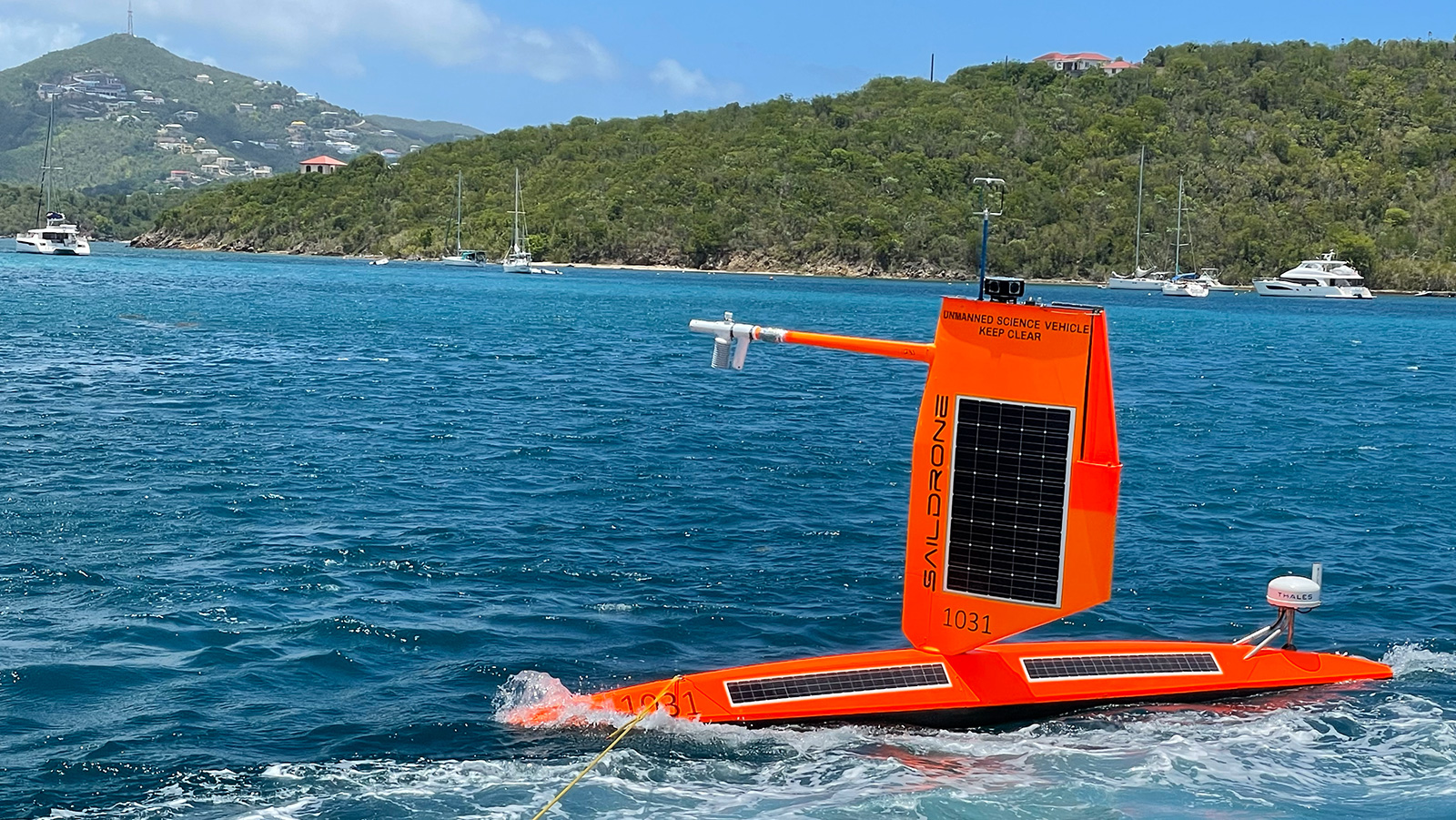
Satellite observations can reveal chlorophyll blooms in the wake of hurricane disturbances but their subsurface biogeochemical anomalies remain poorly described due to limited in situ observations. Here, we quantify the biogeochemical response across the ocean water column to Hurricane Idalia (2023) in the Gulf of America (also known as the Gulf of America). We compile observations across the eastern Gulf using satellite data and two autonomous platforms: a profiling Biogeochemical-Argo (BGC-Argo) float and saildrone. Prior to the formation of Hurricane Idalia, an anomalously large extension of the Mississippi River plume spanned much of the eastern Gulf, contributing low-salinity and high-chlorophyll conditions. Following Idalia’s passage, the saildrone observed surface chlorophyll increases in the river plume extension, while the BGC-Argo float observed subsurface nitrate depletion and oxygen enrichment. These changes occurred as the float measured background ocean conditions evolving from the edge of the Loop Current to a cyclonic eddy, influenced by the river plume extension. Increases in chlorophyll concentration, decreases in nitrate, and elevated dissolved oxygen levels suggested increased primary production. BGC-Argo float observations revealed enhanced upwelling below the surface layer (~22 m) that shoaled the nitracline, fueling the increase in subsurface primary production (20–50 m depth). Our study provides a glimpse on the surface and subsurface ocean-biogeochemical changes associated with the Hurricane Idalia passage, highlighting the importance of the background mesoscale seascape on shaping the phytoplankton response to hurricane-induced disturbances. The combination of observations underscores the value of continuous in situ monitoring to better understand hurricane-driven impacts on the full ocean water column and the impacts these dynamics have on the base of the marine food web.
Download the full paper