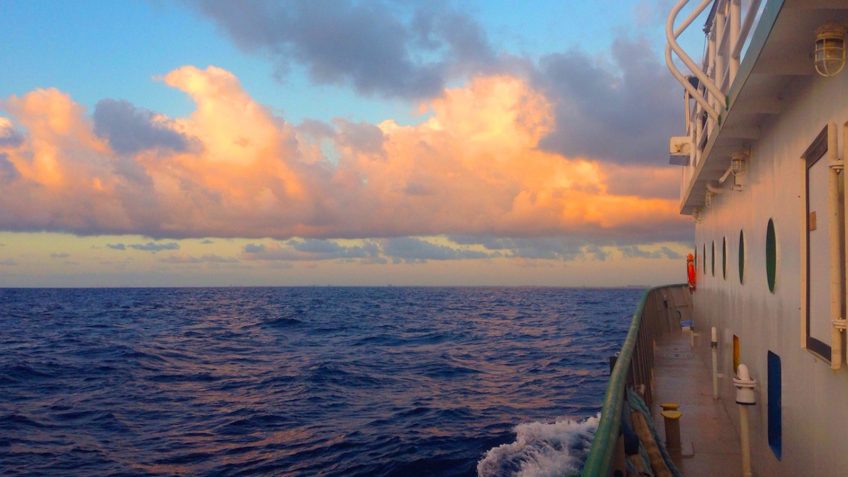
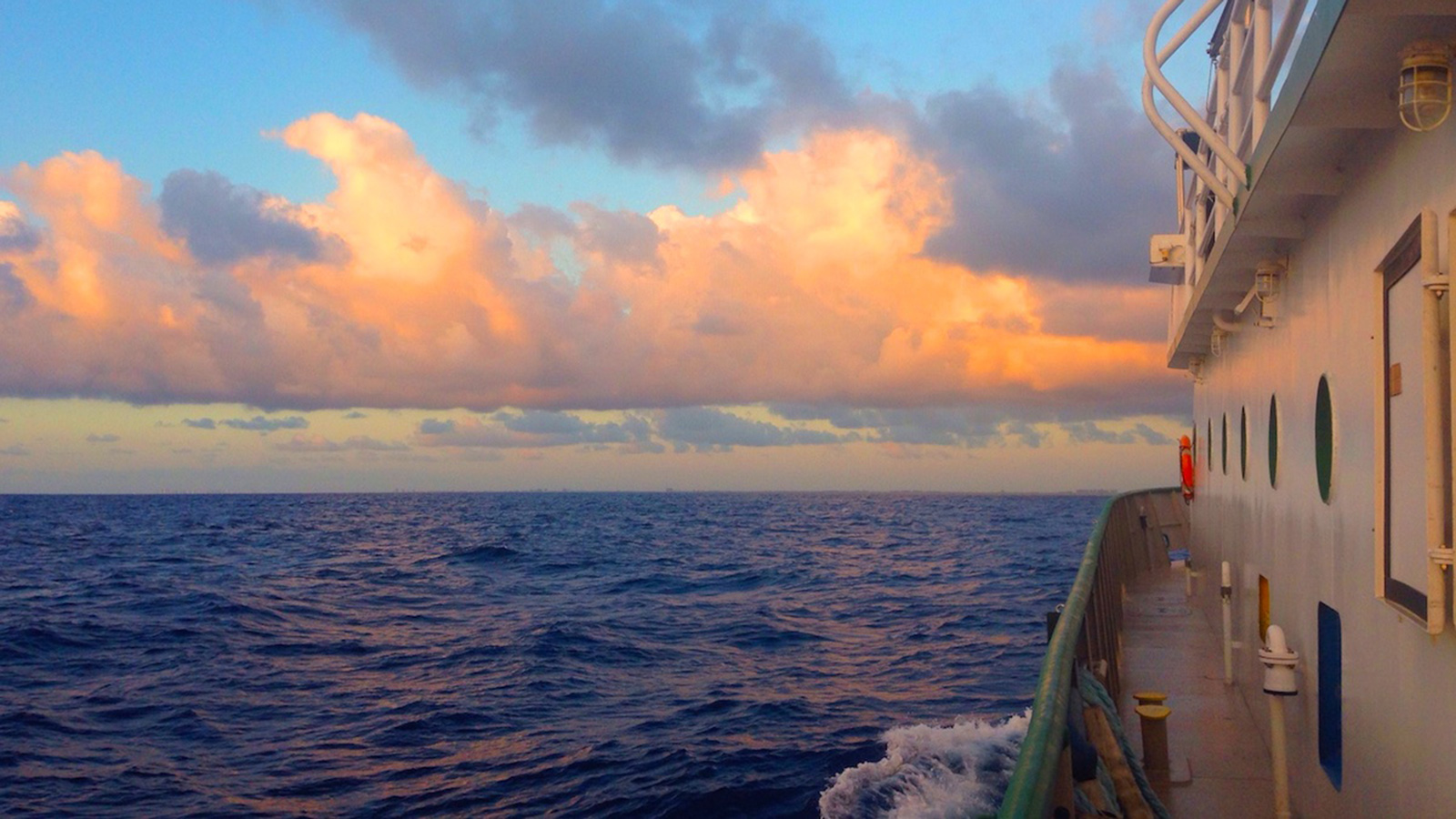
Scientists at NOAA’s Atlantic Oceanographic and Meteorological Laboratory (AOML) have successfully installed an underway pCO2 system on the Research Vessel Falkor (too) as part of a new collaboration with the Schmidt Ocean Institute’s Ocean Biogeochemistry Virtual Institute (OBVI), performing continuous surface measurements of the ocean’s accumulation of atmospheric carbon dioxide as the vessel sails across […]
For the first time during an operational hurricane mission, NOAA and Black Swift Technologies demonstrated simultaneous dual-altitude drone flight capability, the latest advancement in the use of small uncrewed aircraft systems (sUAS) to collect critical atmospheric data in severe storms. The novel feat, coined Mobile Ocean Towers, enables scientists to fly two Black Swift S0 sUAS […]
Hurricane Field Program Data 2026 Storms NOTICE SFMR data from 2023 to present are currently under review for accuracy. Once the accuracy is verified or corrected, the data files will be made available on this website. Click storm name to see data collected during each mission. Atlantic Basin Arthur (AL01) Bertha (AL02) Edouard (AL05) Miscellaneous [...]
In recent years, uncrewed surface vehicles (USV) have become vital tools used to collect observations to improve hurricane forecasts. To fully understand how storms intensify, scientists need data at the air-sea interface where energy is transferred from the ocean to tropical cyclones. This data is most effectively collected by USVs because of their unique ability to operate in dangerous environments and extreme conditions. In a new study, scientists are able to directly quantify the air-sea momentum exchange (termed ‘wind stress’) and related frictional drag effect that acts to slow a hurricane’s rotating winds. These direct measurements of this process are the first to be collected over the ocean in hurricane-force winds.
For the first time, data from a small uncrewed aircraft system (sUAS) – Black Swift Technologies’ S0 – will be integrated into NOAA’s hurricane forecast model during the 2026 hurricane season. Scientists from the Cooperative Institute for Marine and Atmospheric Studies (CIMAS) and NOAA’s Atlantic Oceanographic and Meteorological Laboratory (AOML) determined that incorporating sUAS data […]
On August 30, 2023, Hurricane Idalia made landfall as a major Hurricane in Florida’s Big Bend after meandering through the northwestern Caribbean and intensifying over the warm waters of the Gulf of America. In its aftermath, damage on land was immediately visible, but observations from satellites and ocean-going robots revealed that the ocean was also […]
Hurricanes are among some of the most destructive natural disasters and pose major risks to coastlines. Given warming oceans, increasing storm intensities, and population growth, advancing hurricane research is vital for tracking storms and predicting their strengths and landfalls. A complex team, from program managers to meteorologists, is essential for successfully predicting, observing, and forecasting […]
The 2025 Atlantic hurricane season has officially come to an end. Throughout this record-breaking season, NOAA scientists conducted innovative research on tropical cyclones that will improve forecasting accuracy, enhance understanding of storm behavior, and strengthen preparedness efforts for communities. Their work and dedication contributed to a safer and more resilient future for those facing the impacts of extreme weather events.
NOAA and Oshen robots bring back key wind and pressure data from Hurricane Humberto A small, wind–powered ocean robot became the first uncrewed surface vehicle to capture and transmit data from inside a Category 5 hurricane on Sunday, September 28, as part of research by NOAA, the United Kingdom-based robotics company, Oshen, and the University […]
The flow of the Florida Current, one of the most powerful ocean currents in the world, has been measured by a submarine telecommunications cable between Florida and the Bahamas since 1982. Unfortunately, this record was interrupted in November 2023 due to a mechanical failure of the cable. Building on prior research, a new study presents an alternative method to continue providing the Florida Current daily transport estimates until the cable can be repaired.