Coral Reef Ecosystems
Informing and Enhancing Coral Restoration
What We Do
Our research aims to identify corals that are more resilient in the presence of stressors like warming oceans, ocean acidification, and spread of novel diseases. Informing coral selection by managers and enhancing tools available to maximize coral resilience allows resource managers to be more effective with their restoration plans, especially when out-planting corals to the reef.
Explore the environmental stressors impacting coral reefs that we investigate.
Who We Are









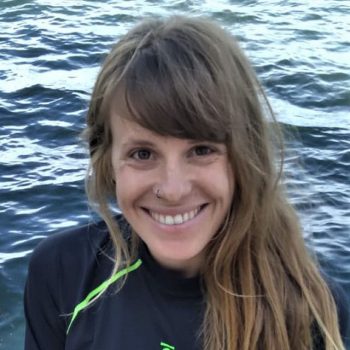





| Tyler Christian
Mission: Iconic Reefs Environmental Monitoring Coordinator


Areas of Research
Research Capabilities
Top News
Scientists at AOML monitor the impacts of ocean acidification on reefs with new series of buoys
April 27, 2026
Divers drop over the gunnel. Tanks, weights, divers, and a mesh bag full of tools all descend in emerald waters beneath grey skies. Off the vessel’s bow, a yellow beacon blinks with a red flashing light and a thin data cable stretching to the seafloor, all connected to a suite of sensors twenty feet below […]


Read More News
Research Impacts & Key Findings
AOML’s Coral Restoration and Resilience research has found that corals exposed to variable temperature treatment in the laboratory for 90 days were better able to withstand the warmer ocean temperatures caused by climate change. The temperature-treated corals were also less likely to succumb to bleaching, while untreated corals experienced more rapid tissue loss and necrosis. These findings offer coral restoration scientists with a new approach to potentially increase the success rate of planting nursery-raised staghorn coral onto degraded reefs. Currently, tens of thousands of acroporid colonies are raised and outplanted on Florida’s coral reef every year, with >70% survivorship observed one year after outplanting.
AOML’s coral scientists have led 16 National Coral Reef Monitoring Program cruises to six field sites in the Atlantic, Caribbean, and Gulf region gathering valuable data used to provide a comprehensive view of the effects of climate change on coral reef ecosystems. Over 3000 water samples have been processed. This data has been used to examine coral response to precise, controlled changes in environmental conditions and determine coral resilience to stressors such as rising temperatures, ocean acidification, and nutrient flux.
Featured Publication
Scientists at AOML employ photogrammetry to monitor coral reef infrastructure at unprecedented scale
In a new study, scientists at AOML and the University of Miami’s Cooperative Institute for Marine and Atmospheric Studies (CIMAS) demonstrate how photogrammetry-based techniques enable their team to monitor the persistence and structural complexity of coral reef habitats at an unprecedented scale. Led by John Morris, Ph.D., a CIMAS Postdoctoral Associate with AOML’s Coral Program, […]

Outreach Partnerships
Coral City Camera
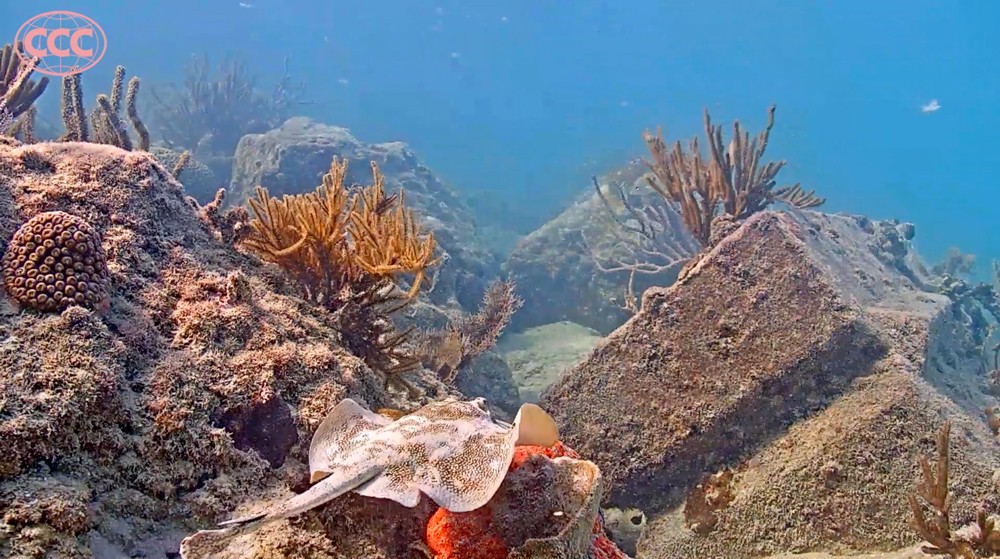
In collaboration with Coral Morphologic, a coral-themed art studio based in Miami, we have assisted in the deployment of the Coral City Camera (CCC), an underwater camera streaming live from an urban coral reef in Miami, Florida. The CCC is a public art and scientific research project led primarily by Coral Morphologic, and produced with Bridge Initiative and Bas Fisher Invitational.
Funding Sources and Partners