Tag: ocean observations

Subsurface biogeochemical response to Hurricane Idalia within a cyclonic eddy and river plume–stratified environment

Jennifer K. McWhorter, Lev B. Looney, et al.

Satellite observations can reveal chlorophyll blooms in the wake of hurricane disturbances but their subsurface biogeochemical anomalies remain poorly described due to limited in situ observations. Here, we quantify the biogeochemical response across the ocean water column to Hurricane Idalia (2023) in the Gulf of America (also known as the Gulf of America). We compile observations across the eastern Gulf using satellite data and two autonomous platforms: a profiling Biogeochemical-Argo (BGC-Argo) float and saildrone. Prior to the formation of Hurricane Idalia, an anomalously large extension of the Mississippi River plume spanned much of the eastern Gulf, contributing low-salinity and high-chlorophyll conditions. Following Idalia’s passage, the saildrone observed surface chlorophyll increases in the river plume extension, while the BGC-Argo float observed subsurface nitrate depletion and oxygen enrichment. These changes occurred as the float measured background ocean conditions evolving from the edge of the Loop Current to a cyclonic eddy, influenced by the river plume extension. Increases in chlorophyll concentration, decreases in nitrate, and elevated dissolved oxygen levels suggested increased primary production. BGC-Argo float observations revealed enhanced upwelling below the surface layer (~22 m) that shoaled the nitracline, fueling the increase in subsurface primary production (20–50 m depth). Our study provides a glimpse on the surface and subsurface ocean-biogeochemical changes associated with the Hurricane Idalia passage, highlighting the importance of the background mesoscale seascape on shaping the phytoplankton response to hurricane-induced disturbances. The combination of observations underscores the value of continuous in situ monitoring to better understand hurricane-driven impacts on the full ocean water column and the impacts these dynamics have on the base of the marine food web.

Download the full paper

Read Full Article

In the wake of hurricanes: satellites and robots reveal an altered biogeochemical landscape

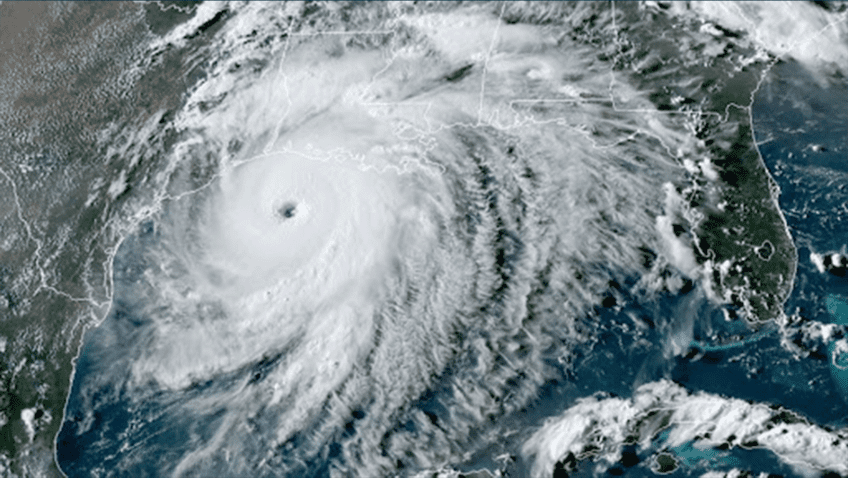
On August 30, 2023, Hurricane Idalia made landfall as a major Hurricane in Florida’s Big Bend after meandering through the northwestern Caribbean and intensifying over the warm waters of the Gulf of America. In its aftermath, damage on land was immediately visible, but observations from satellites and ocean-going robots revealed that the ocean was also […]

Read Full Article

Breaking records in the sky and sea: Innovations in research through the 2025 Atlantic hurricane season

The 2025 Atlantic hurricane season has officially come to an end. Throughout this record-breaking season, NOAA scientists conducted innovative research on tropical cyclones that will improve forecasting accuracy, enhance understanding of storm behavior, and strengthen preparedness efforts for communities. Their work and dedication contributed to a safer and more resilient future for those facing the impacts of extreme weather events.

Read Full Article

Ensuring continuity: A new method for Florida Current transport observations

The flow of the Florida Current, one of the most powerful ocean currents in the world, has been measured by a submarine telecommunications cable between Florida and the Bahamas since 1982. Unfortunately, this record was interrupted in November 2023 due to a mechanical failure of the cable. Building on prior research, a new study presents an alternative method to continue providing the Florida Current daily transport estimates until the cable can be repaired. 

Read Full Article

Record warm ocean temperatures fuel longest-lasting 2023 US heatwave

Extreme heat is the leading weather-related cause of death in the United States. In a new study published in Nature Communications, scientists found a link between the long-lasting 2023 heatwave over the southwest US and Mexico and the record warm sea surface temperatures in both the Atlantic and Pacific Ocean. 

Read Full Article

Ocean Month: Exploring and understanding our ocean through research cruises

Research cruises are essential for scientists to collect data, deploy instrumentation, and maintain ocean observing systems. NOAA regularly conducts research at sea to study the ocean and atmosphere, advancing our understanding of the ocean, monitoring ocean conditions, and ensuring sustainable fisheries and healthy marine habitats. These expeditions provide essential data for weather prediction, ocean acidification […]

Read Full Article

Monitoring vital signs: Tools and technologies at the heart of physical oceanography

In 2018, an Australian couple curiously stumbled upon a bottle of gin washed ashore in Wedge Island, Australia. Yet, there was no gin inside. Rather, preserved within the bottle was a note with the date June 12th, 1886; the name of a German barque, Paula; the ship’s departure and arrival ports; and the exact coordinates […]

Read Full Article

Ocean Month: Identifying the ocean’s role in fueling hurricanes

Join us as we celebrate and learn about our world ocean throughout National Ocean Month. June 1st not only marks the start of National Ocean Month, it also is the first day of hurricane season. To kick off this year’s Ocean Month, we are looking at the major role the ocean plays in the formation […]

Read Full Article

Australia to Thailand: I09N GO-SHIP cruise completes voyage 

After nearly 40 days at sea, the I09N GO-SHIP cruise (short for “Global Ocean Ship-based Hydrographic Investigations Program”) aboard the R/V Thomas G. Thompson arrived in Phuket, Thailand on April 27th, successfully completing its mission surveying both the Indian Ocean and Bay of Bengal. After departing from Fremantle, Australia on March 21st, the international team of researchers spent weeks collecting data essential for investigating global changes in ocean physics, chemistry, and biology.

Read Full Article

Argo, the ‘crown jewel’ of ocean observing systems, turns 25

Originally published on noaa.gov on December 11, 2024. Somewhere in the middle of the ocean, a merchant mariner lowers a cylindrical robotic ocean observing instrument from a ship into the sea to record ocean temperature and salinity. Another instrument is deployed from a plane into the eye of a hurricane to take the pulse of […]

Read Full Article