All three NOAA heavy aircraft are deploying to St. Croix today in preparation for missions into what is now Tropical Storm Sam. AOML/HRD plans to collaborate with the Office of Naval Research Tropical Cyclone Rapid Intensification (TCRI) field campaign to fly P-3 and G-IV aircraft missions into Hurricane Sam in the central North Atlantic. The […]
Read Full Article
This study investigates how to get the largest improvements to tropical cyclone forecasts from wind profiles obtained from a proposed new instrument, a Doppler Wind Lidar, on polar-orbiting satellites. Wind profiles have the largest impact when the tropical cyclone’s structure was changing rapidly and when the measurements were taken close to the tropical cyclone center. […]
Read Full Article
The full paper can be accessed at https://www.nature.com/articles/s41598-021-97766-7.pdf. For more information, contact aoml.communications@noaa.gov.Jie Tang and Xiaotu Lei were supported by the Key Program for International S&T Cooperation Projects of China (No. 2017YFE0107700), National Natural Science Foundation of China (No. 41475060 and 41775065) and the ESCAP/WMO EXOTICCA Project. Jun Zhang was supported by NOAA grant NA19OAR0220186 [...]
Read Full Article
Improving the accuracy and ultimate value of NOAA’s operational hurricane forecasts requires more complete real-time knowledge of atmospheric and oceanic conditions and more realistic representation of key physical processes in forecast models. To meet these needs, a research team from NOAA’s Pacific Marine Environmental Laboratory (PMEL) and Atlantic Oceanographic and Meteorological Laboratory (AOML) deployed five saildrones […]
Read Full Article
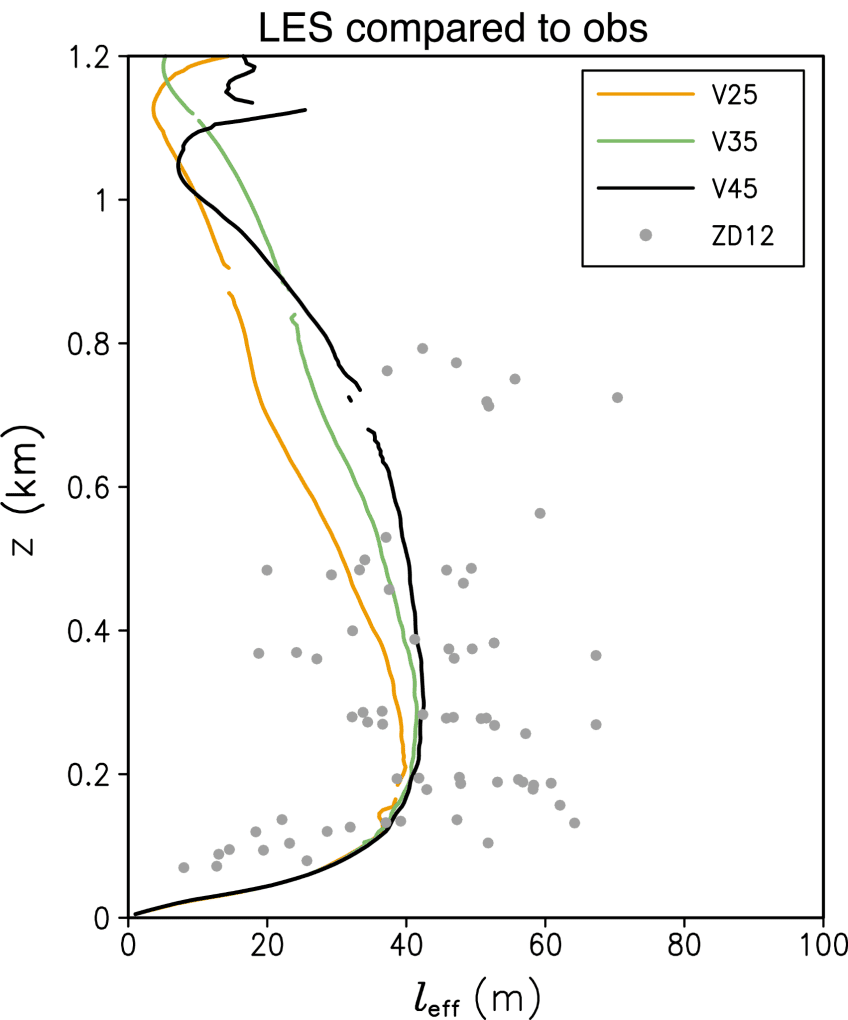
Summary: Turbulence is made up of random and continuously changing wind. It is important in tropical cyclones because turbulence in the lowest 1-2 km of the atmosphere (the planetary boundary layer or PBL) and in clouds affects tropical cyclone intensity and structural change. Meteorologists use computer models to forecast the weather, including tropical cyclones. These […]
Read Full Article
Coral Reef Ecosystems Informing and Enhancing Coral Restoration <!-- JUMP TO DATA OR SCROLL TO LEARN MORE --> What We Do Our research aims to identify corals that are more resilient in the presence of stressors like warming oceans, ocean acidification, and spread of novel diseases. Informing coral selection by managers and enhancing tools available [...]
Read Full Article
Summary: Turbulence is made up of random and continuously changing wind. It is important in tropical cyclones (TCs) because turbulence in the lowest 1-2 km of the free atmosphere (the planetary boundary layer or PBL) affects TC intensity and structural change. Meteorologists use computer models to forecast the weather, including TCs. These models forecast the […]
Read Full Article
Part of the difficulty of forecasting tropical cyclone (TC) track and intensity (where the TC is going and how strong it will be) stems from the lack of frequent, accurate observations over tropical oceans where TCs form and develop. While Hurricane Hunter aircraft can collect vital observations in and near TCs, those observations are limited […]
Read Full Article
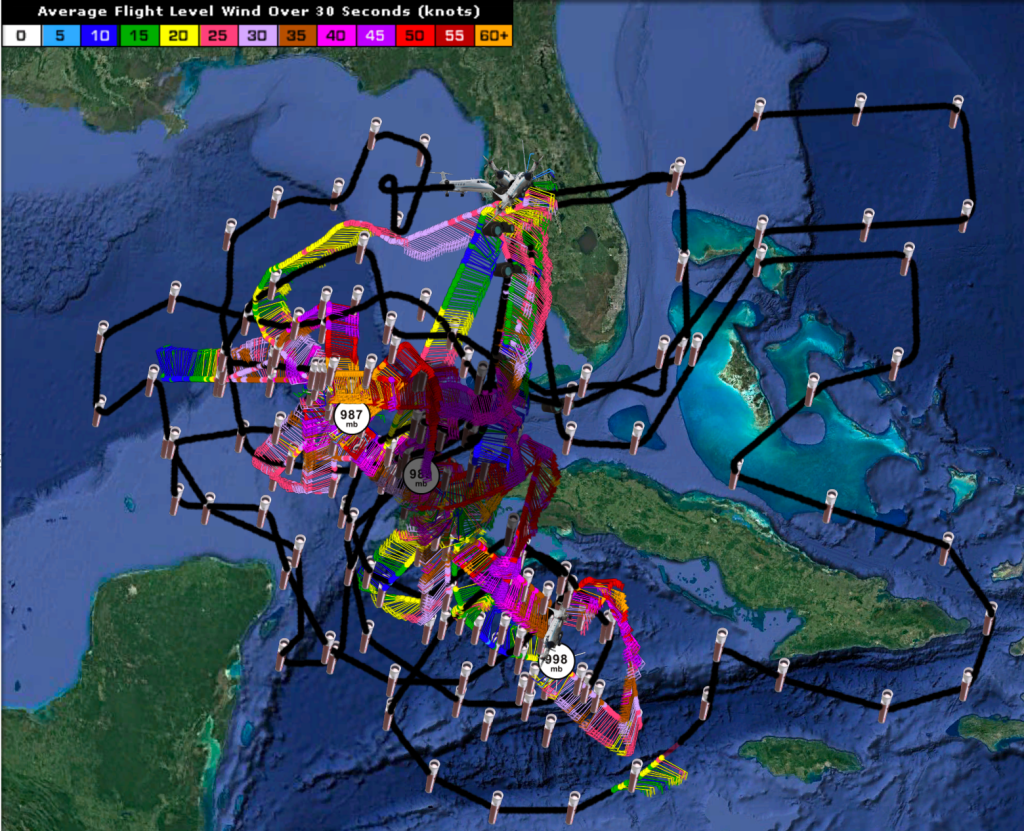
NOAA has so far completed five flights into and around Hurricane Ida as it crossed over the Cayman Islands and western Cuba toward its forecast landfall along the Louisiana coast. Two synoptic surveillance missions were conducted by the NOAA G-IV high-altitude aircraft to gather dropwindsonde and Doppler radar data around the hurricane to be ingested […]
Read Full Article
NOAA Hurricane Hunters completed 6 missions into Tropical Storm Fred, and 11 and 7 missions in and around Hurricanes Grace and Henri, respectively. The first mission into Fred occurred before the system had a well-defined center and was not yet named a tropical depression. Subsequent missions sampled the dry air and wind shear around Fred […]
Read Full Article