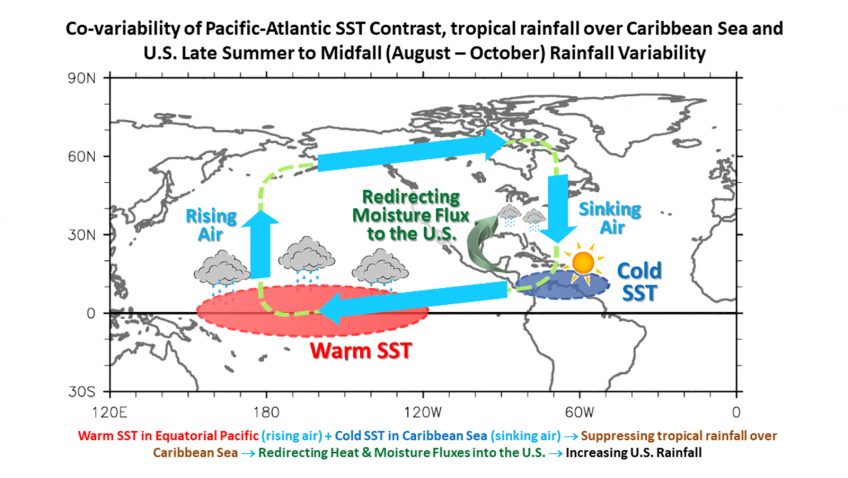
AOML Scientists Tackle one of the Most Challenging Problems in U.S. Seasonal Rainfall Prediction

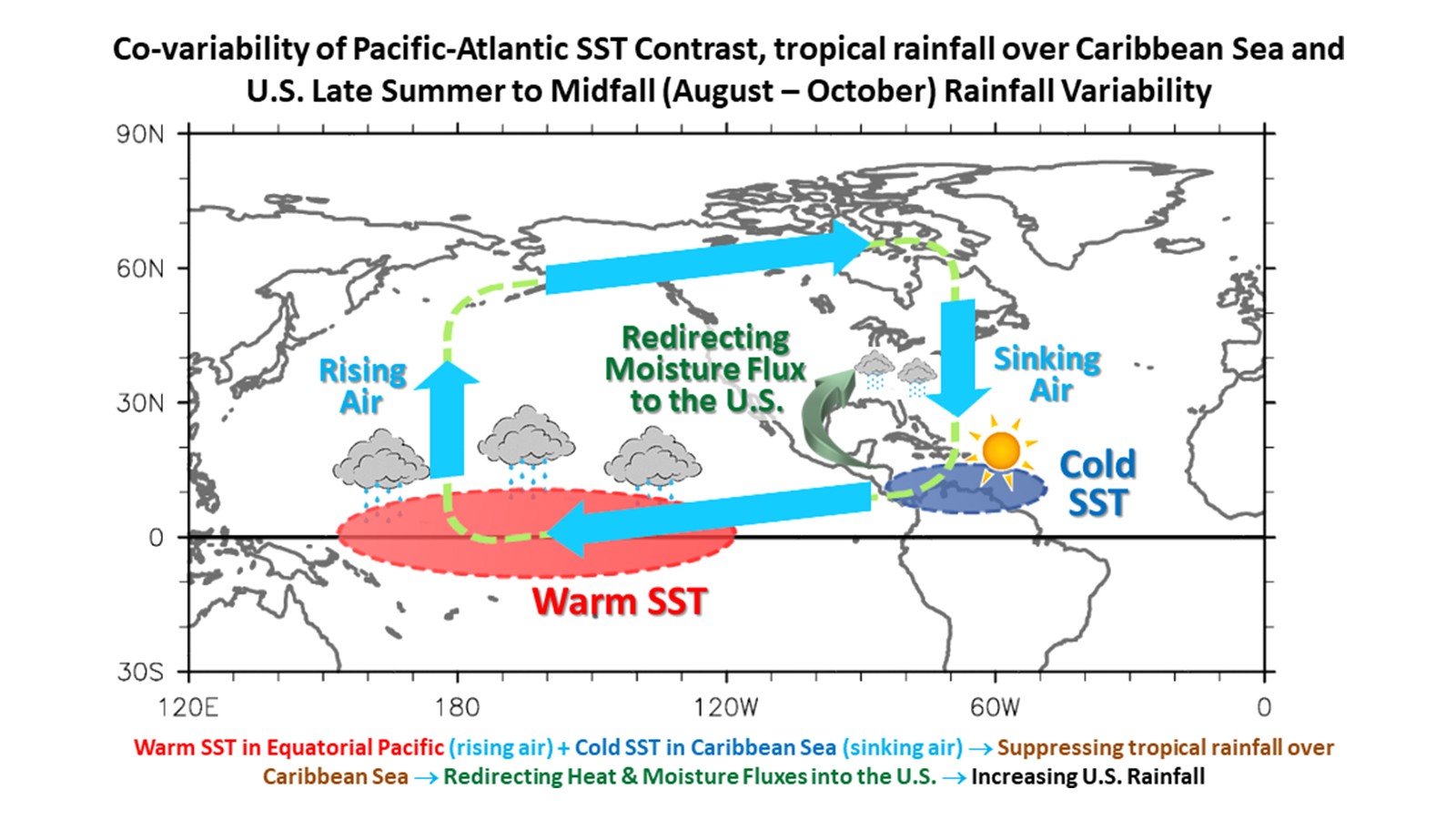
In a recent article published in Geophysical Research Letters, AOML and CIMAS scientists investigated U.S. rainfall variability, focusing on the late summer to mid-fall (August-October) season. The main goal of the study was to identify potential predictors of U.S. precipitation during August-October and to explore the underlying physical mechanisms.

Read Full Article

AOML Scientists Awarded the Department of Commerce Bronze Medal

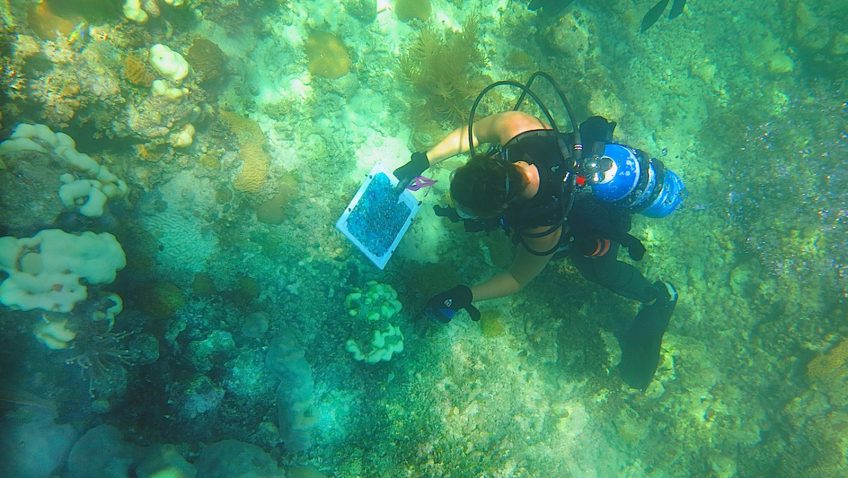
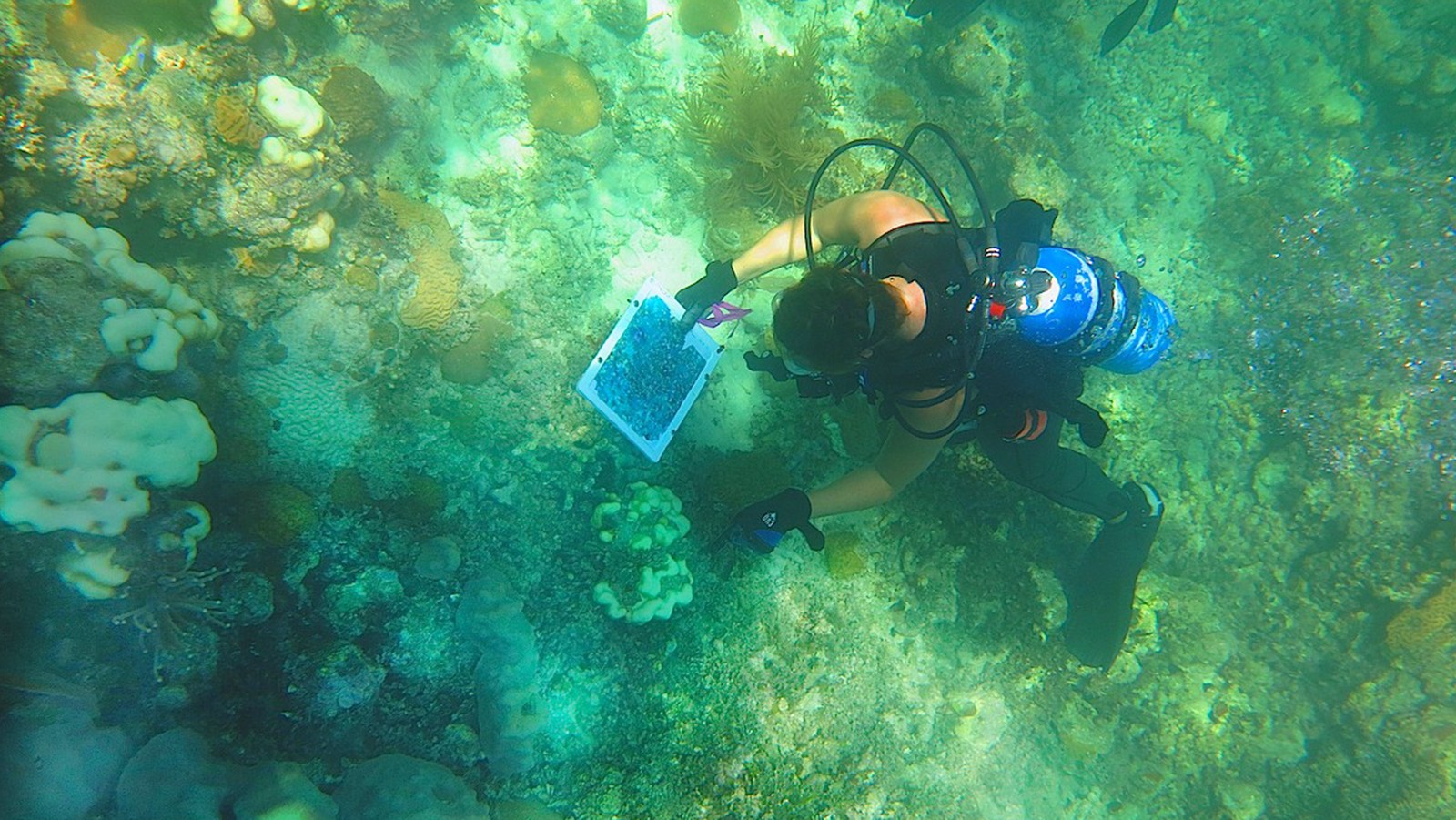
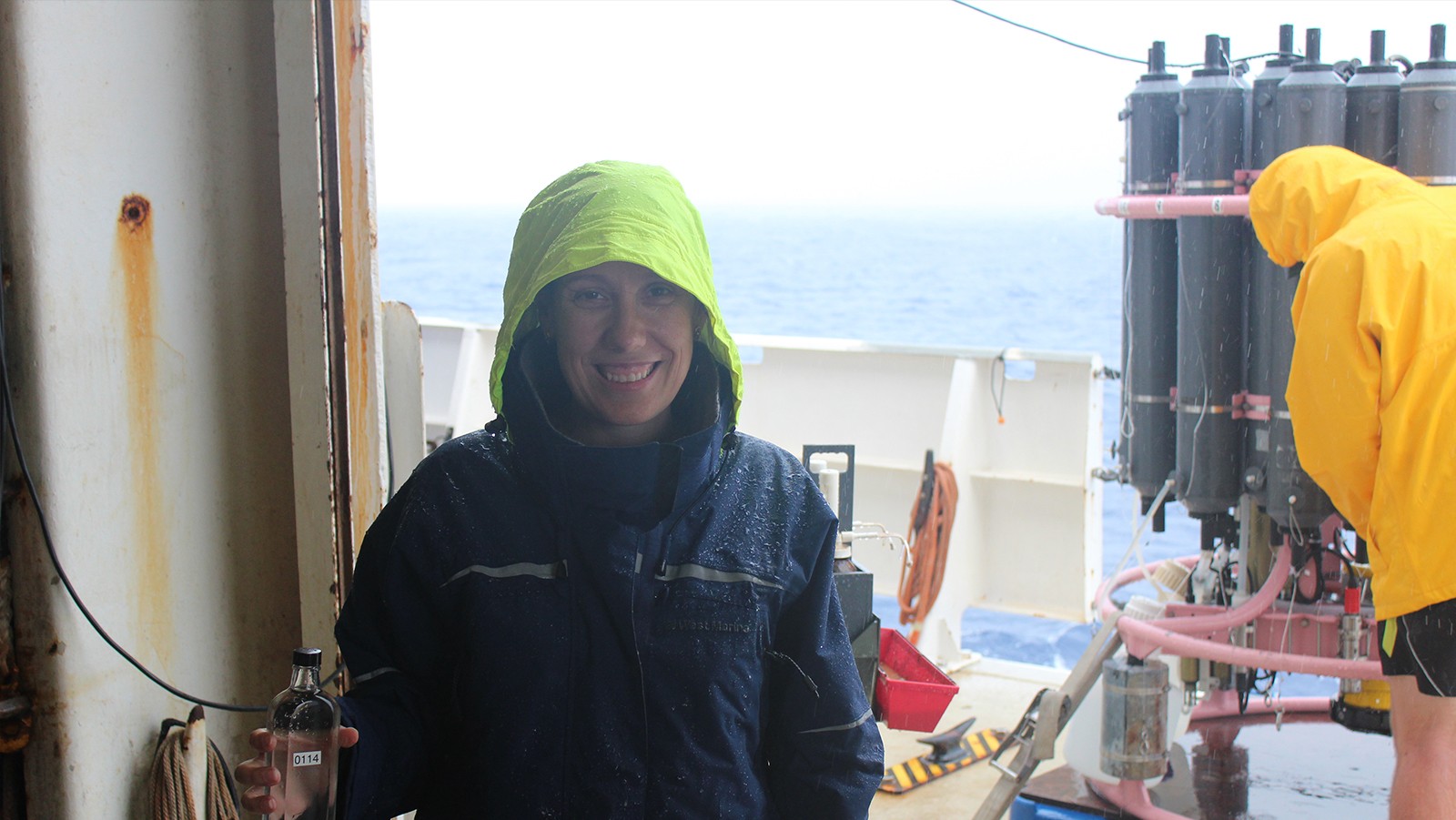
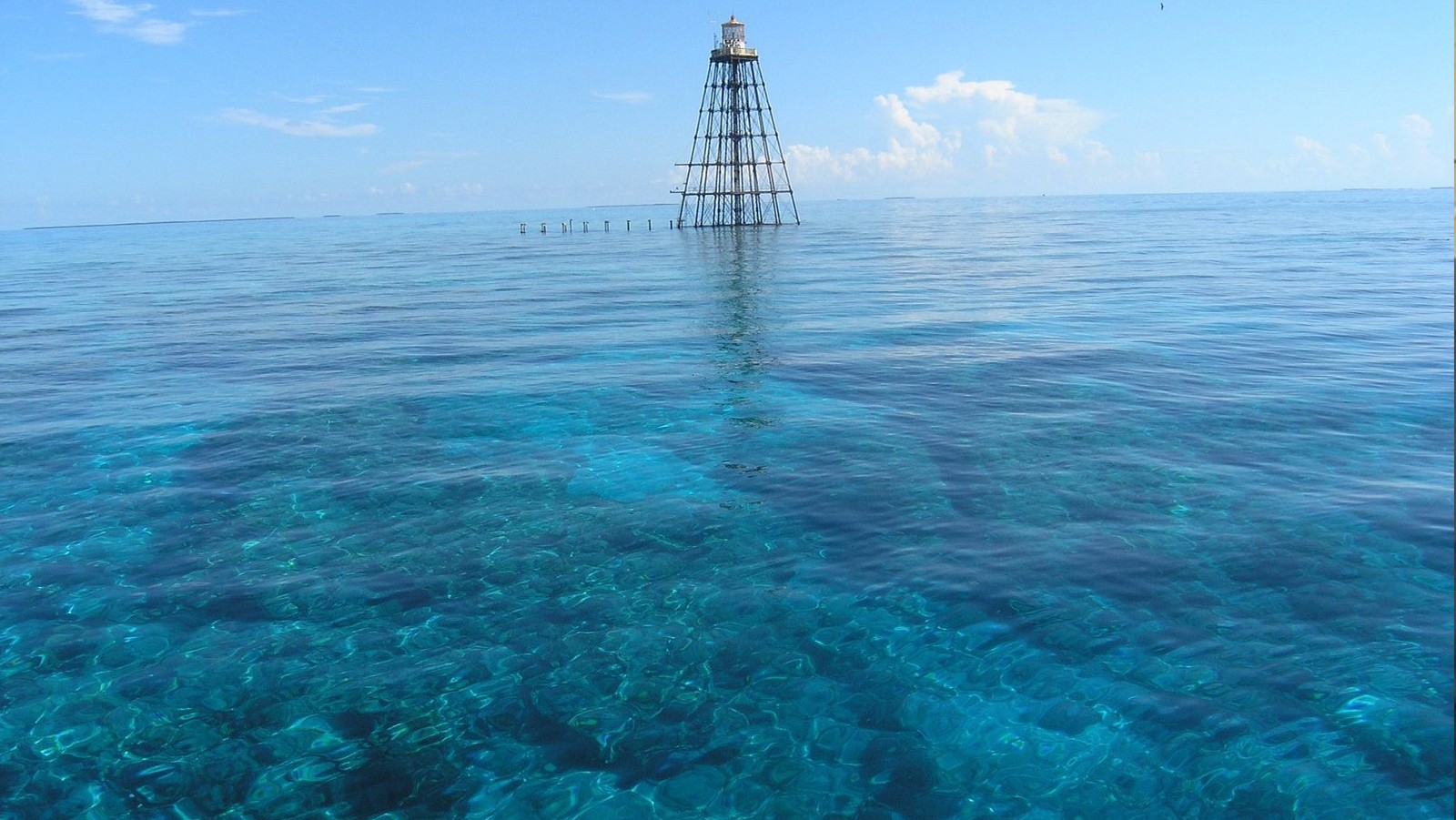
AOML is proud to recognize the recent achievements of our outstanding scientists who were recently awarded the Department of Commerce Bronze Medal for outstanding contributions which have increased the efficiency and effectiveness of NOAA. Kelly Goodwin was honored for her Leadership in the development of the Omics program in NOAA. Ian and Derek are honored for their contributions to addressing Stoney Coral Tissue Loss Disease in the FL Keys.

Read Full Article

Two Bacteria Types Linked With Stony Coral Tissue Loss Disease Hint At How This Deadly Disease Might Spread

New research on stony coral tissue loss disease reveals similar “bacterial signatures” among sick corals and nearby water and sediments for the first time. Results hint at how this deadly disease might spread, and which bacteria are associated with it, on Florida’s Coral Reef.

Read Full Article

Research: Ocean Acidification Varies Around North America with Hot Spots Found in Northeast and West Coast Waters

New NOAA and partner research comparing ocean acidification around North America shows that the most vulnerable coastal waters are along the northern part of the east and west coasts. While previous research has looked at specific regions, the new study appearing in Nature Communications, is the first in-depth comparison of ocean acidification in all North American coastal ocean waters.

Read Full Article

Vertical Turbulent Cooling of the Mixed Layer in the Atlantic ITCZ and Trade Wind Regions

Foltz, G. R., Hummels, R., Dengler, M., Perez, R. C., & de Araujo, M. (2020). Vertical turbulent cooling of the mixed layer in the Atlantic ITCZ and trade wind regions. Journal of Geophysical Research: Oceans, 125, e2019JC015529. https://doi.org/10.1029/2019JC015529

Abstract:
The causes of the seasonal cycle of vertical turbulent cooling at the base of the mixed layer are assessed using observations from moored buoys in the tropical Atlantic Intertropical Convergence Zone (ITCZ) (4N, 23W) and trade wind (15N, 38W) regions together with mixing parameterizations and a one-dimensional model. At 4N the parameterized turbulent cooling rates during 2017–2018 and 2019 agree with indirect estimates from the climatological mooring heat budget residual: both show mean cooling of 25–30W/m^2 during November–July, when winds are weakest and the mixed layer is thinnest, and 0–10W/m^2 during August–October. Mixing during November–July is driven by variability on multiple time scales, including subdiurnal, near-inertial, and intraseasonal…

Read Full Paper

Read Full Article

Florida Keys Integrated Assessment Team Launches New Ecosystem Status Report Web Tool

The Florida Keys Integrated Assessment (IEA) team, led by AOML in partnership with managers and scientists from the Office of National Marine Sanctuaries, launched a new Ecosystem Status Report web tool on May 13th. The IEA approach aims to balance the needs of nature and society through Ecosystem-Based Management. It provides scientific knowledge of the Florida Keys National Marine Sanctuary ecosystem to scientists, policy makers and resource managers. 

Read Full Article

Advances in the Application of Surface Drifters

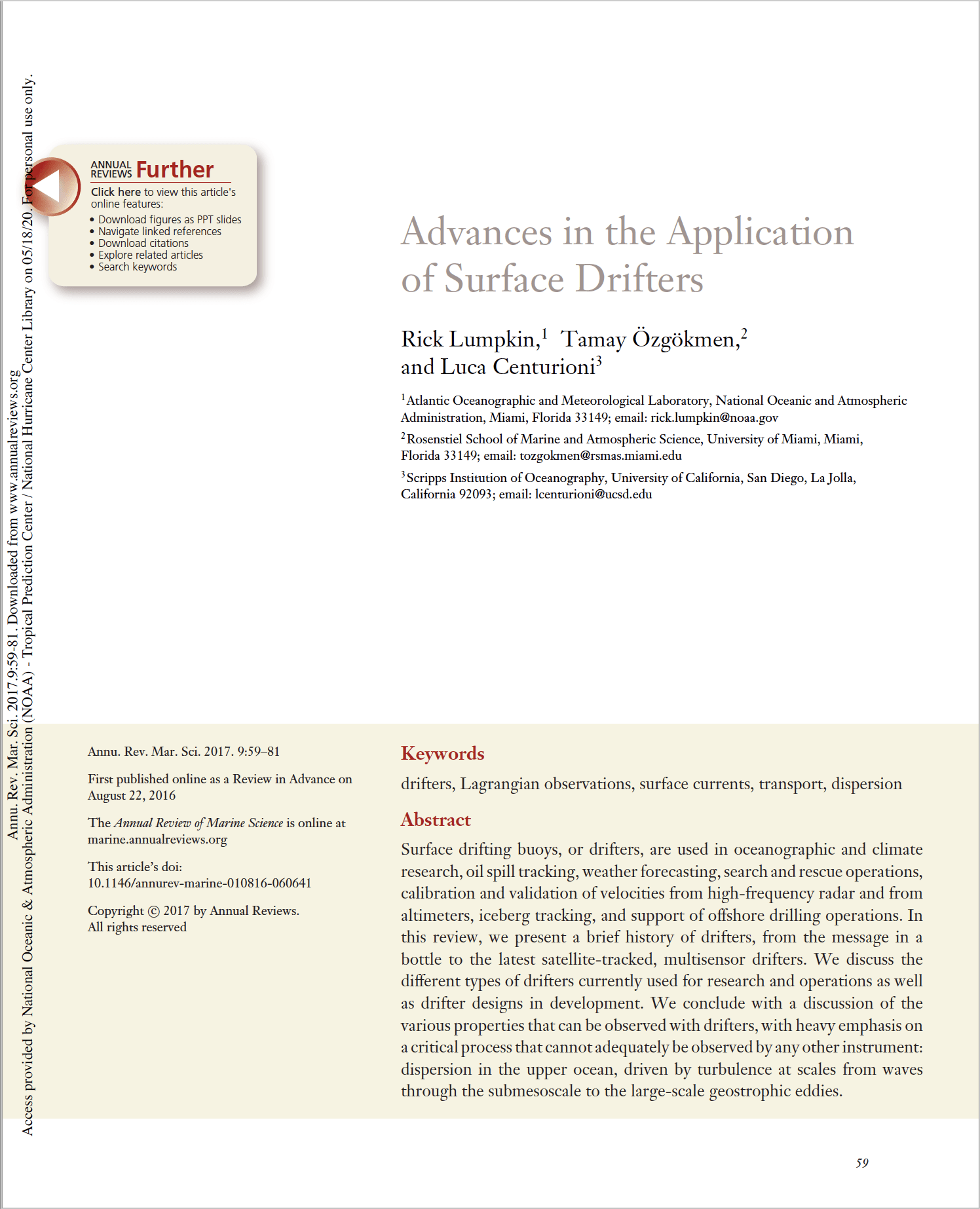
Lumpkin, R., Özgökmen, T., & Centurioni, L. (2017). Advances in the application of surface drifters. Annual Review of Marine Science, 9, 59-81.

Abstract:

Surface drifting buoys, or drifters, are used in oceanographic and climate research, oil spill tracking, weather forecasting, search and rescue operations, calibration and validation of velocities from high-frequency radar and from altimeters, iceberg tracking, and support of offshore drilling operations. In this review, we present a brief history of drifters, from the message in a bottle to the latest satellite-tracked, multisensor drifters. We discuss the different types of drifters currently used for research and operations as well as drifter designs in development. We conclude with a discussion of the various properties that can be observed with drifters, with heavy emphasis on a critical process that cannot adequately be observed by any other instrument: dispersion in the upper ocean, driven by turbulence at scales from waves through the submesoscale to the large-scale geostrophic eddies.

Download Full PDF
Read Full Article

Connection between Madden-Julian Oscillation and U.S Tornadoes may Provide Earlier Warning for Storms

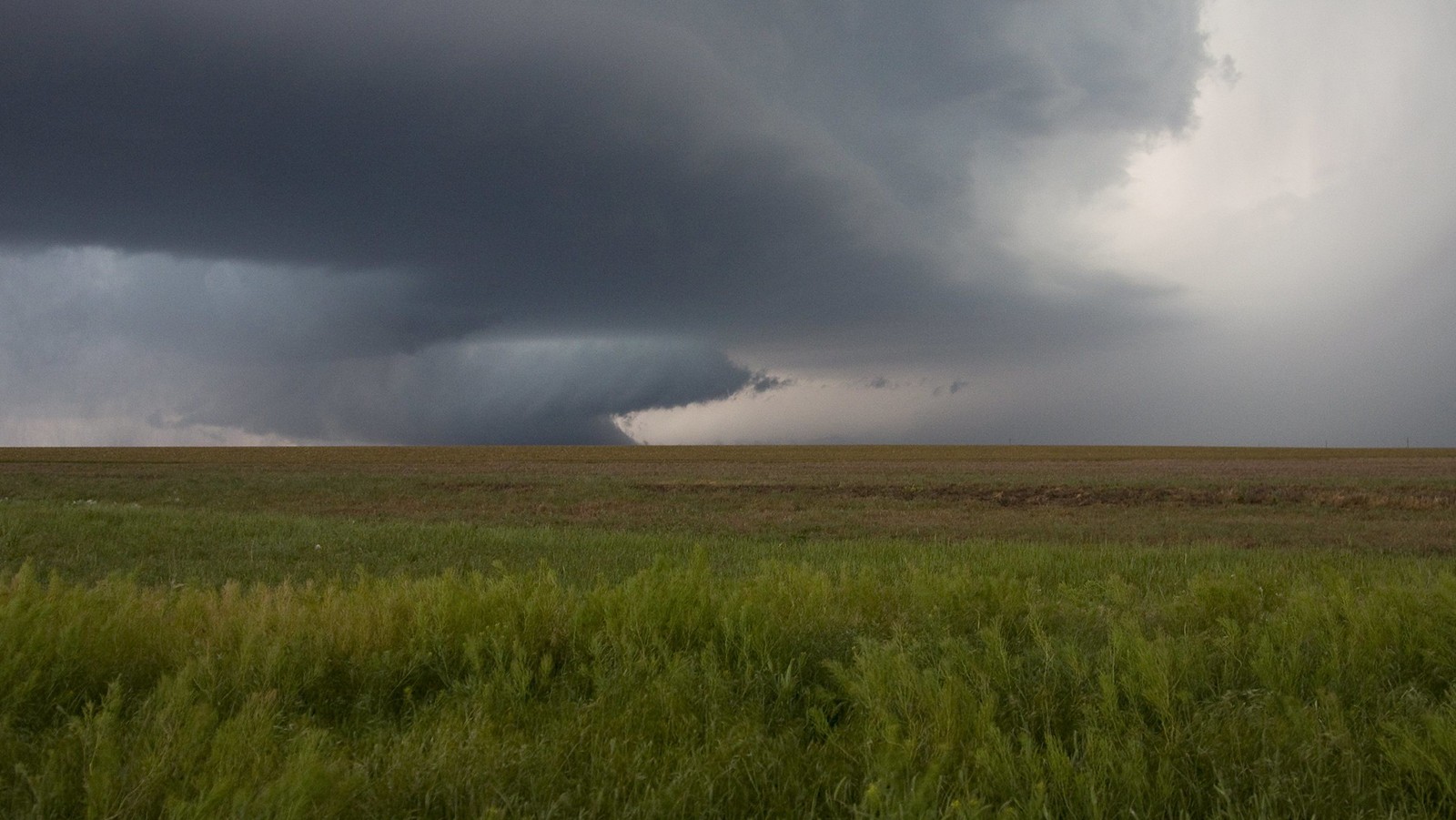
Recently, scientists at NOAA’s Atlantic Oceanographic and Meteorological Laboratory (AOML) and the Cooperative Institute for Marine and Atmospheric Studies (CIMAS) explored the physical causes between U.S. tornado activity and the Madden-Julian Oscillation. In a study recently published in the Journal of Climate (Kim et al., 2020), they showed that a series of key atmosphere-ocean processes are involved in the remote impact of Madden-Julian Oscillation on U.S. tornado activity.

Read Full Article

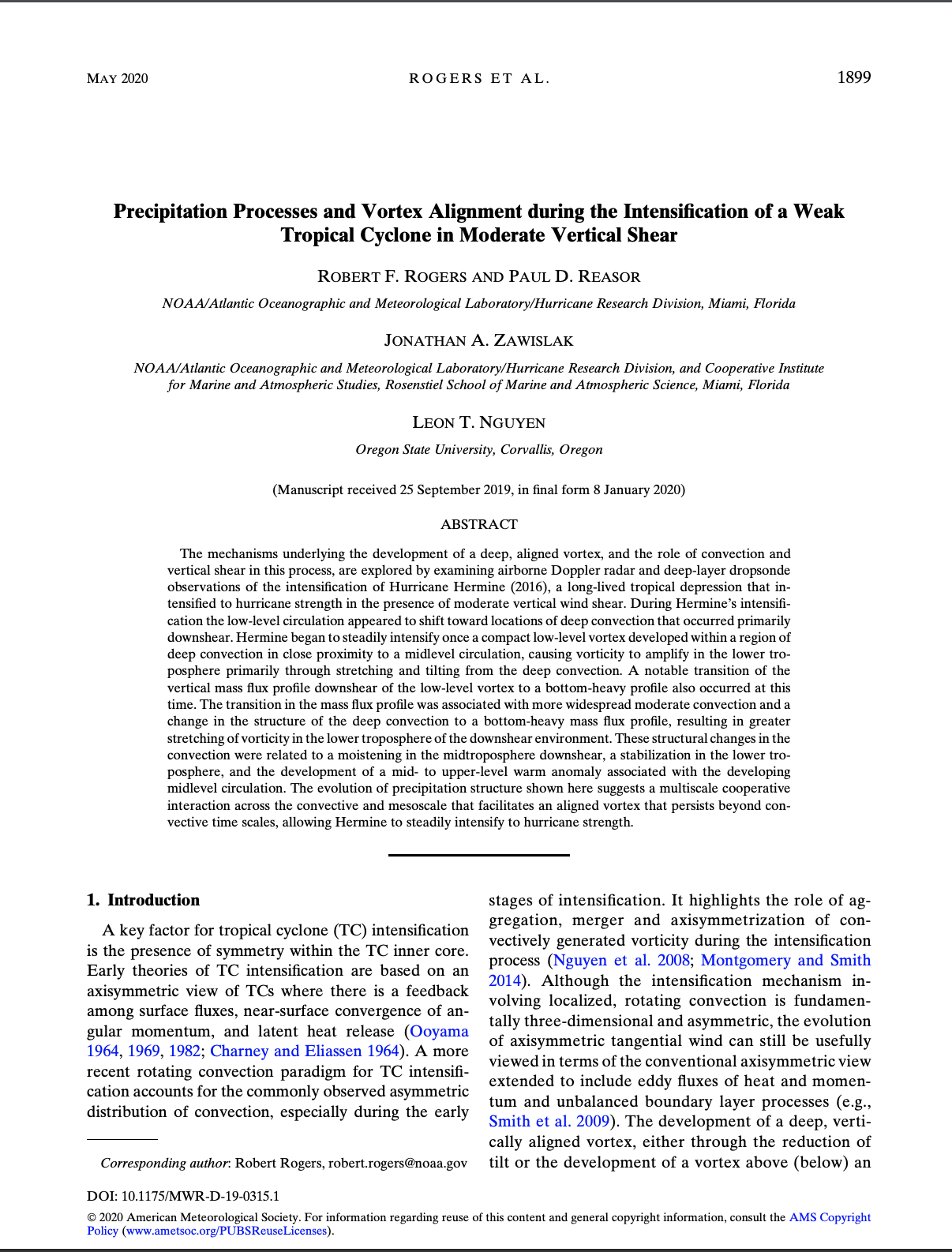
Precipitation Processes and Vortex Alignment during the Intensification of a Weak Tropical Cyclone in Moderate Vertical Shear

Rogers, R. F., Reasor, P. D., Zawislak, J. A., & Nguyen, L. T. (2020). Precipitation Processes and Vortex Alignment during the Intensification of a Weak Tropical Cyclone in Moderate Vertical Shear. Monthly Weather Review, (2020).

Abstract:

The mechanisms underlying the development of a deep, aligned vortex, and the role of convection and vertical shear in this process, are explored by examining airborne Doppler radar and deep-layer dropsonde observations of the intensification of Hurricane Hermine (2016), a long-lived tropical depression that intensified to hurricane strength in the presence of moderate vertical wind shear. During Hermine’s intensification the low-level circulation appeared to shift toward locations of deep convection that occurred primarily downshear. Hermine began to steadily intensify once a compact low-level vortex developed within a region of deep convection in close proximity to a midlevel circulation, causing vorticity to amplify in the lower troposphere primarily through stretching and tilting from the deep convection…

Download PDF

Read Full Article

NOAA Celebrates 50 Years of Science, Service, and Stewardship

NOAA’s unique science mission benefits every American life every day in positive ways, including keeping Americans safer and contributing to greater US economic growth than ever before. In the next 50 years, NOAA will advance innovative research and technology, answer tough scientific questions, explore the unexplored, inspire new approaches to conservation, and continue its proud legacy of science, service, and stewardship.

Read Full Article