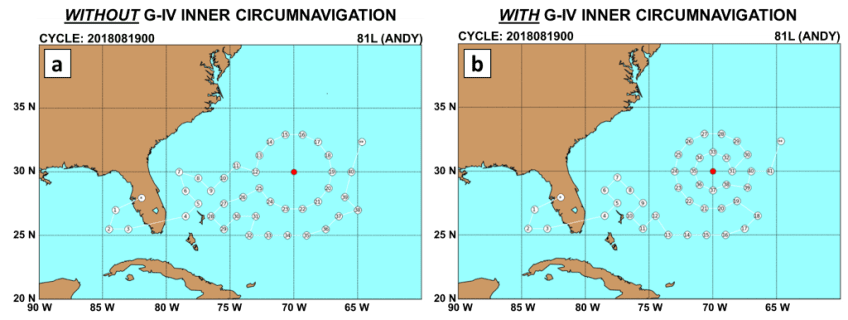
This study highlights a successful research-to-operations implementation and evaluation, facilitated by having close connections between the research and operational communities within the National Oceanic and Atmospheric Administration (NOAA). In particular, research at NOAA’s Atlantic Oceanographic and Meteorological Laboratory (AOML) led the National Hurricane Center (NHC) to modify flight-track patterns for some aircraft missions around tropical […]
Read Full Article
Research Highlights August 8, 2022Coral Rescue in Miami BeachJanuary 24, 2022Sediments a Likely Culprit in Spread of Deadly Disease on Florida Coral Reefs, Study FindsJuly 20, 2021Scientists at AOML Present Coral Research at the First Virtual International Coral Reef Symposium Research Interests Use of advanced molecular techniques to better understand coral physiology, health, and adaptation [...]
Read Full Article
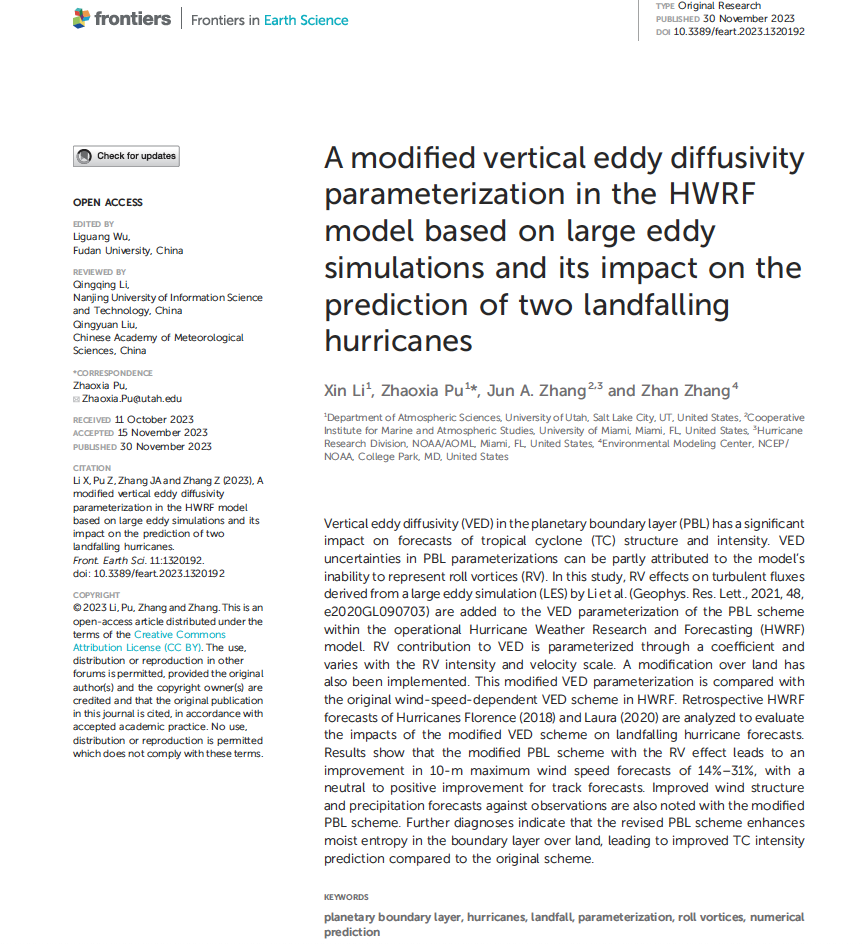
Vertical turbulent mixing in the planetary boundary layer (PBL) has a significant impact on numerical forecasts of tropical cyclone structure and intensity. This study modified the PBL parameterization scheme in the Hurricane Weather Research and Forecast (HWRF) model to include the effects of roll vortices on turbulent fluxes with information based on previous work with […]
Read Full Article
NOAA conducted the first ever collocated drone mission into a hurricane recently, collecting vital data in the lower levels of the storm that have been historically too hard to reach – until now. Check out the story at https://www.aoml.noaa.gov/noaa-altius-saildrone-mission-into-tammy/.
Read Full Article
Urban flooding during tropical cyclone landfall can lead to major impacts, and understanding and forecasting it is an important and emerging research area. Two recent Atlantic hurricanes, Florence in 2018 and Harvey in 2017, are forecast using a state-of-the-art computer model with two different ways to include urban areas. The model can predict rainfall more […]
Read Full Article
In many tropical cyclones, the center of circulation in the lower and middle levels of the atmosphere are not in the same location, what we call tilt. Using a recently developed database of wind analyses from Doppler radars on Hurricane Hunter aircraft, this study shows that the distance between the circulation centers can be a […]
Read Full Article
Vertical wind shear, which is typically defined as the difference in the speed and direction of wind in the bottom and top of the tropical cyclone, significantly impacts the structures and intensities of tropical cyclones. This review paper summarizes the findings of previous studies that have looked at the interactions between tropical cyclones and wind […]
Read Full Article
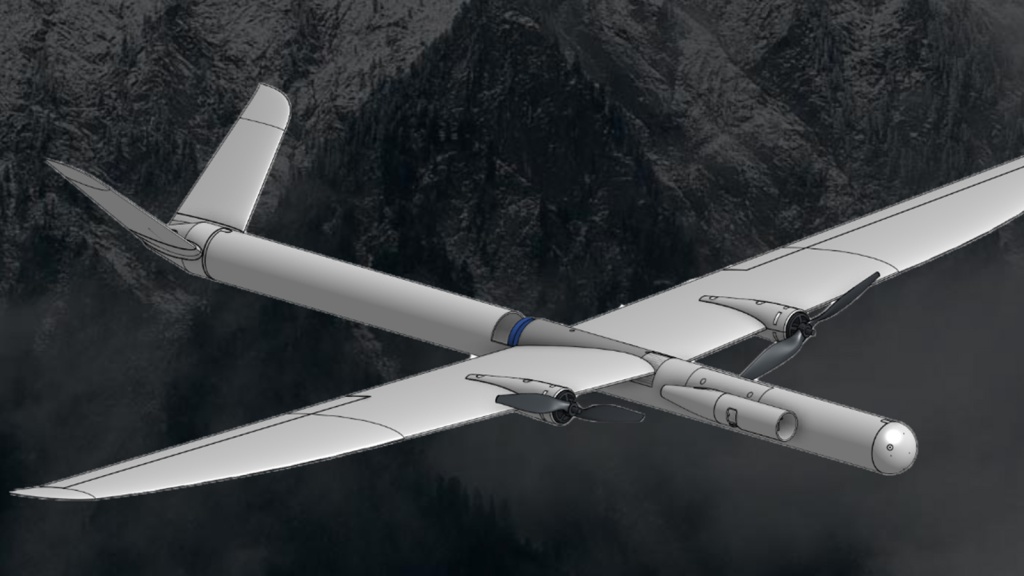
NOAA hurricane researchers successfully deployed a new uncrewed aircraft system (UAS) into Tammy to measure parts of the storm too dangerous for humans to go. The Black Swift Technologies S0™ UAS was launched from the NOAA WP-3D Orion Hurricane Hunter aircraft by scientists from NOAA’s Atlantic Oceanographic and Meteorological Laboratory during missions into the storm as it strengthened and […]
Read Full Article
Wind structure in the hurricane boundary layer shows pronounced asymmetries over water and at landfall. Aircraft observations have noted significant changes in the nature of these asymmetries prior to and during Hurricane Ida’s landfall. Such changes can have important implications for damage patterns during TC landfall, and understanding the physical processes underlying these changes can […]
Read Full Article
This study used a tropical cyclone (TC) wind model to develop, test, and improve estimates of high wind speeds utilizing signal reflections from Global Positioning System (GPS) satellites. The paper can be found at https://ieeexplore.ieee.org/document/10180079. For more information, contact aoml.communications@noaa.gov.
Read Full Article