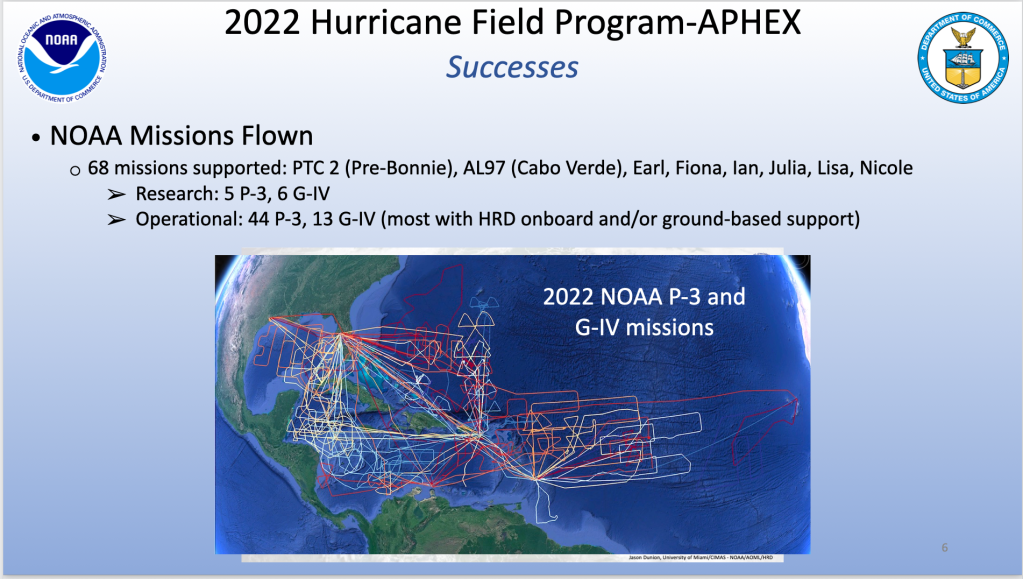
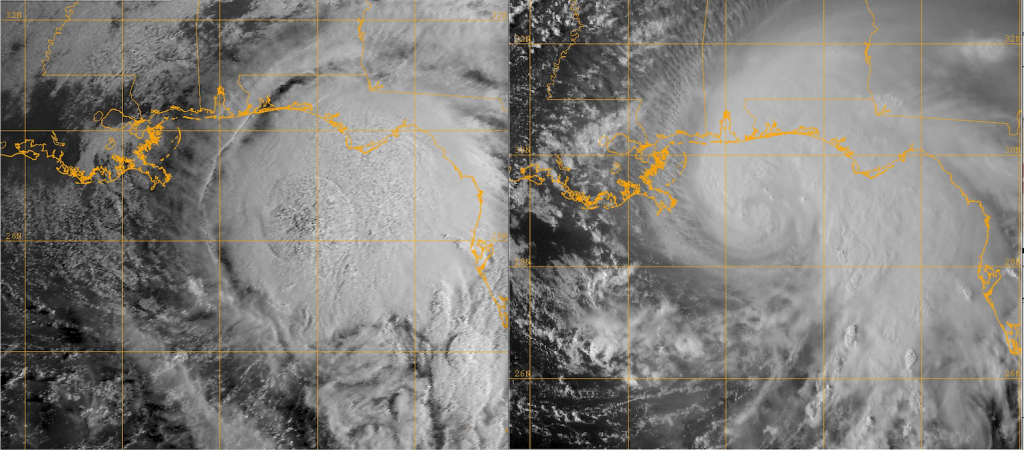
Hurricane Field Program leadership held two sessions made up of a series of short science talks to wrap up the 2022 hurricane season. Talks included preliminary science results, challenges and successes in sampling and analysis strategies, modeling results, etc. The 2022 season saw 68 missions flown by NOAA aircraft into eight different tropical system. NOAA […]
Read Full Article
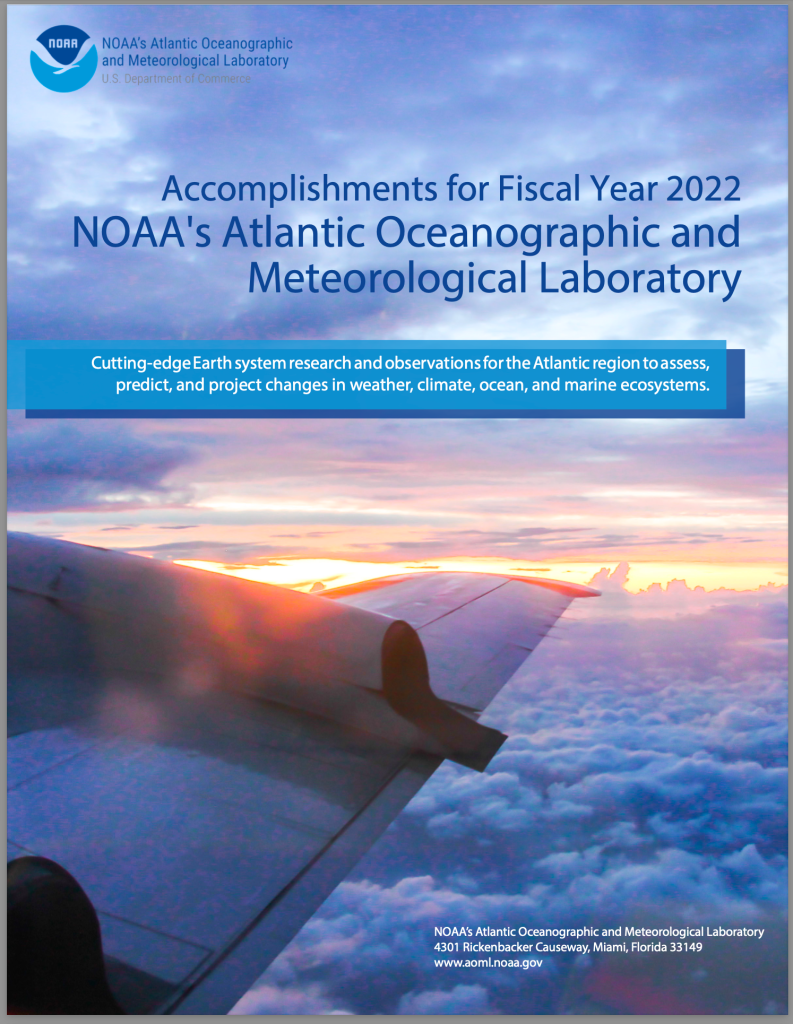
Read about our accomplishments, including improvements to tropical cyclone forecasts, first-even NOAA aircraft missions from Cabo Verde, deployment of the Altius-600 uncrewed aircraft into the eye of Hurricane Ian, Saildrones and ocean gliders, the opening of the Hurricane and Ocean Testbed, and more. Click here. For more information, contact AOML.communications@noaa.gov.
Read Full Article
This study looks at the accuracy of estimates of how rough the ocean surface is below tropical cyclones (TC) compared to observations, and at the impact of changing the roughness on TC computer forecasts. A mismatch between observations of the roughness and what the model showed was found, and correcting this improved forecasts of the […]
Read Full Article
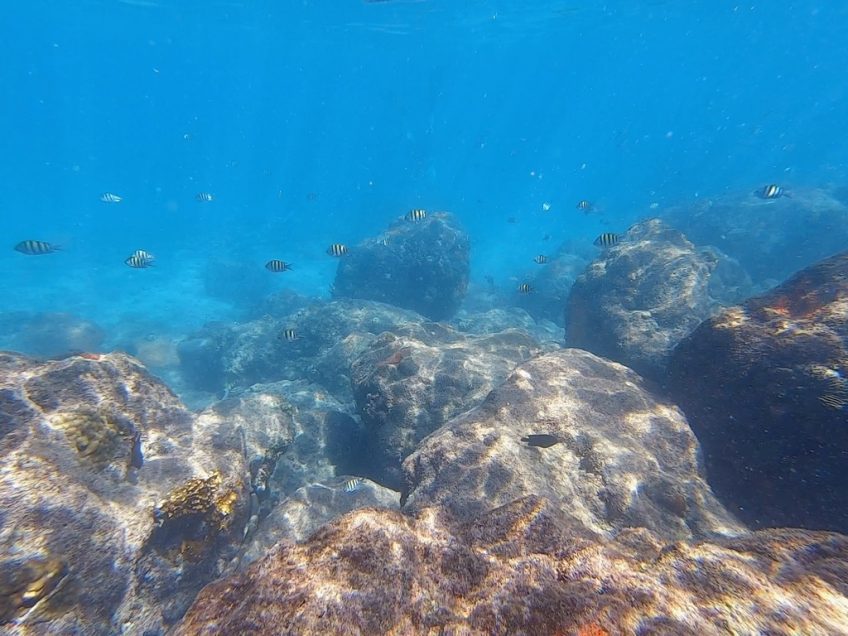
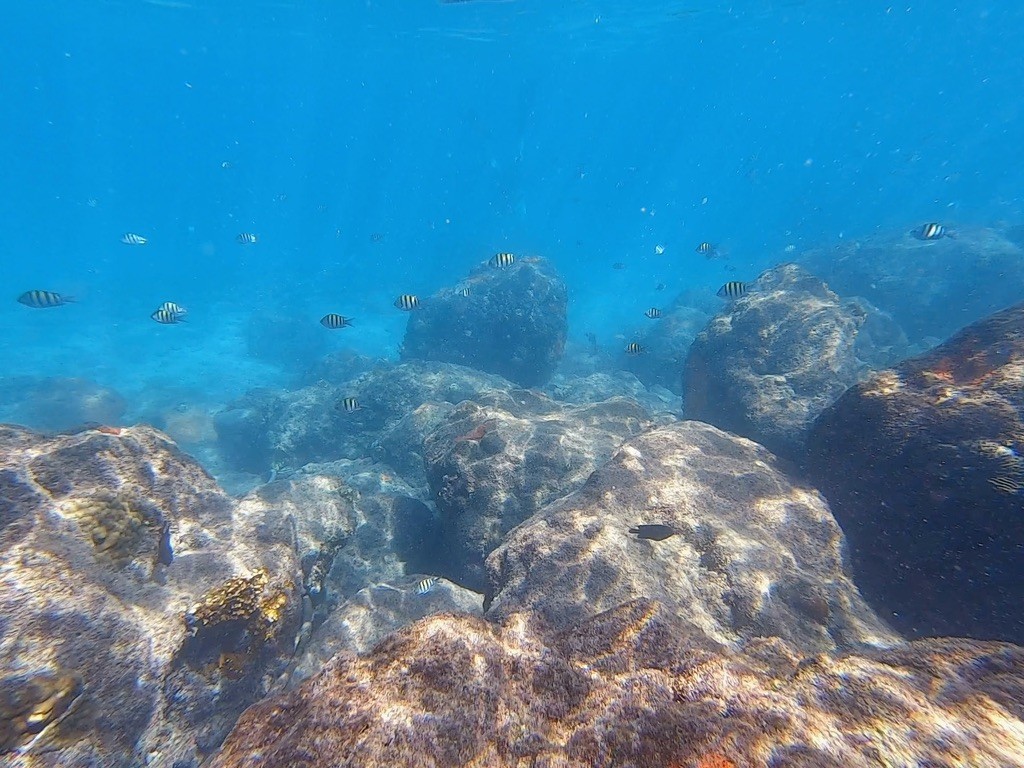
When white lesions began appearing at the famously intact Flower Garden Banks coral reef system, scientists knew a rapid, multi-agency, collaborative response was vital. Scientists from NOAA’s Atlantic Oceanographic and Meteorological Laboratory (AOML) and University of Miami’s Cooperative Institute of Marine and Atmospheric Studies (CIMAS) recently co-authored a publication about rapid tissue loss on the three dominant coral species at Flower Garden Banks National Marine Sanctuary, observed during National Coral Reef Monitoring Program cruises in the fall of 2022.
Read Full Article
A 2023 Department of Commerce Gold Medal was awarded to AOML’s Greg Foltz, Gustavo Goni, and Francis Bringas, alongside their partners at NOAA’s Pacific Marine and Environmental Laboratory (PMEL), for pioneering the application of uncrewed surface vehicles (saildrones) to observe tropical cyclones. Also recognized were AOML’s Cooperative Institute employees Jun Zhang and Joaquin Trinanes who […]
Read Full Article
Research Highlights November 17, 2022Congratulations to the Winners of 2022 Department of Commerce and NOAA Awards!February 3, 2022Jasmin John Named the New Deputy Director of the Ocean Chemistry and Ecosystems Division at AOML Research Interests Earth System Modeling. Climate mitigation and associated impacts. Thresholds, transitions, and associated timescales of the Earth System. Coastal interactions and [...]
Read Full Article
A key step in the development of a tropical cyclone is the formation of a vertically aligned circulation; however, the processes that lead to an aligned circulation in nature are not well understood. This study uses an unprecedented set of observations collected from NOAA’s P-3 and G-IV aircraft, ground-based radar, and satellites to examine the […]
Read Full Article
Atmospheric temperature and moisture can be measured accurately using radio signals from any Global Navigation Satellite System (GNSS) like the familiar Global Positioning System (GPS). The process, called “radio occultation,” measures changes in radio signals between satellites as they pass through the atmosphere. When incorporated into computer weather models, these data improve forecasts. However, when […]
Read Full Article
The world’s largest yearly gathering for the weather, water, and climate community took place earlier this month in Denver, Colorado. Scientists from NOAA’s Atlantic Oceanographic & Meteorological Laboratory participated in the 103rd annual American Meteorological Society meeting from January 8 – 12 through formal presentations, posters, panel discussions, and more. The theme of this year’s […]
Read Full Article
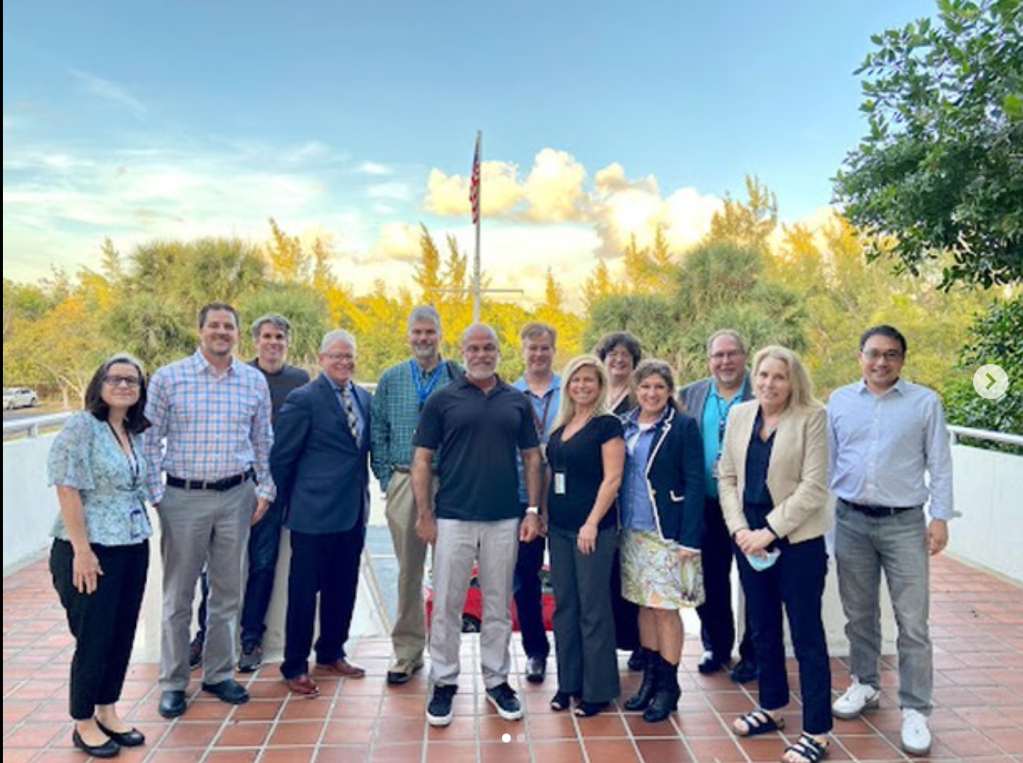
AOML staff and NDBC visitors at AOML’s entrance.. AOML Director John Cortinas and AOML Deputy Director Molly Baringer hosted a team of National Data Buoy Center (NDBC) experts led by Director Bill Burnett last week. They toured AOML facilities and met with scientists to exchange ideas and further develop collaborations. AOML’s Physical Oceanography Division Director […]
Read Full Article