AOML receives coral tree, expanding research capabilities
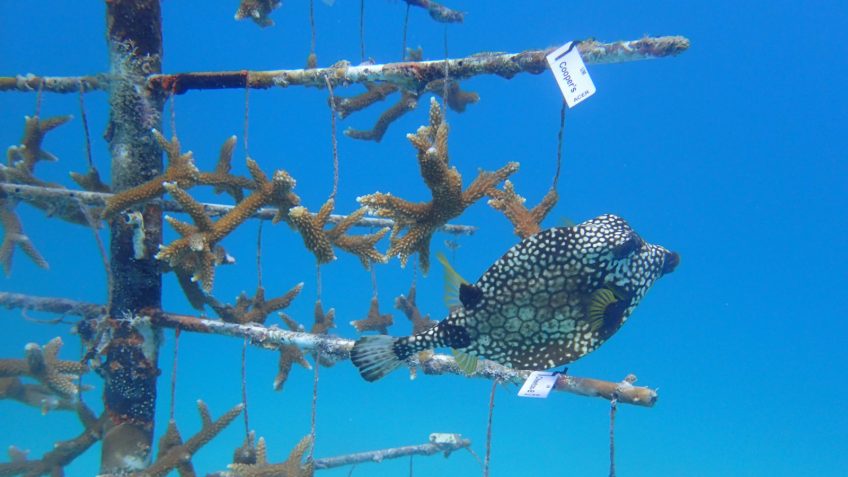
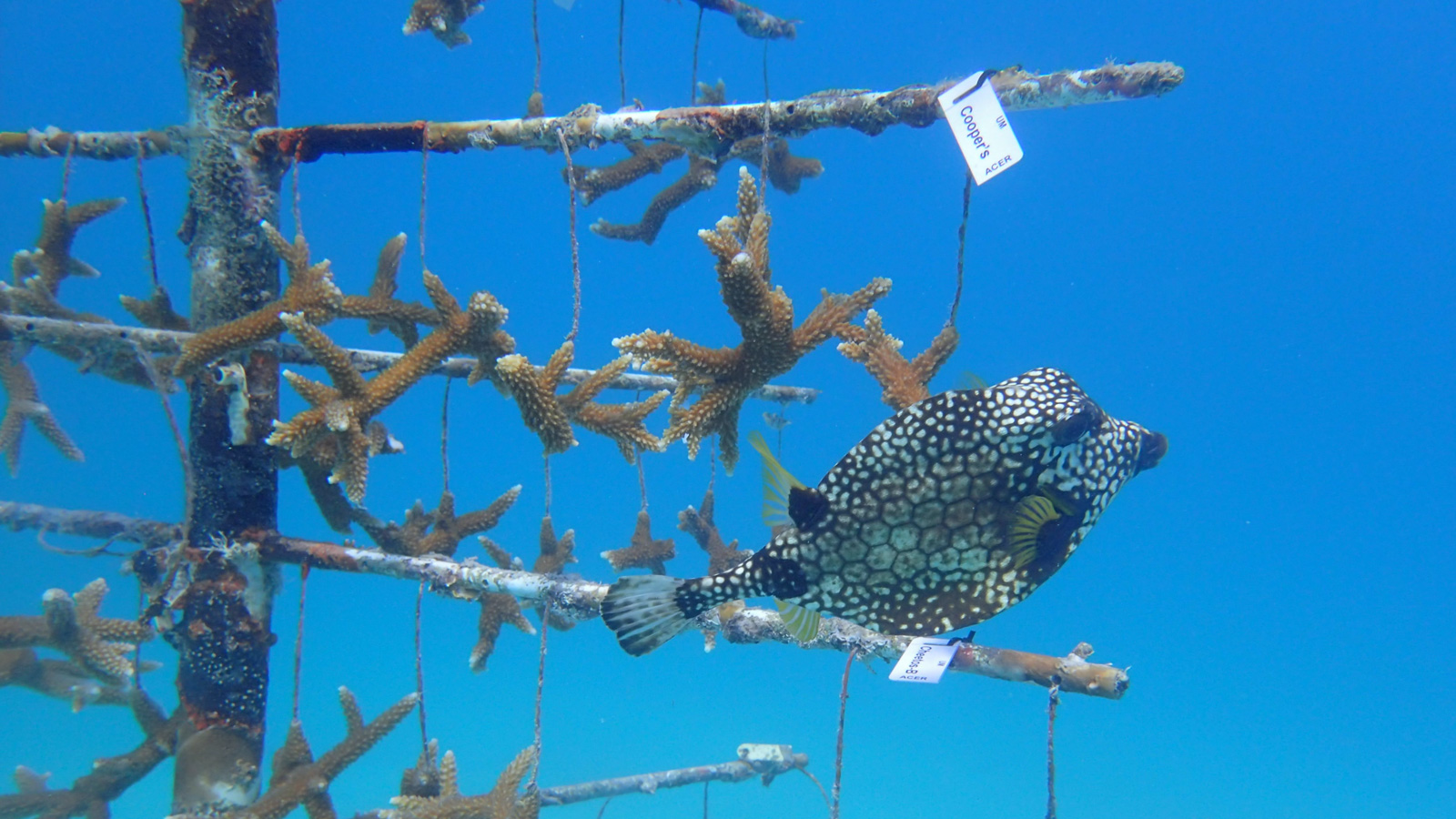
In collaboration with the Lirman Lab at the University of Miami (UM), NOAA Atlantic Oceanographic and Meteorological Laboratory’s (AOML) Coral Program now has its own coral nursery tree!
In collaboration with the Lirman Lab at the University of Miami (UM), NOAA Atlantic Oceanographic and Meteorological Laboratory’s (AOML) Coral Program now has its own coral nursery tree!


The National Tropical Weather Conference is a professional conference for broadcast meteorologists and broadcast meteorology students focusing on tropical system forecasting, disaster preparedness, safety, research, impacts and social media communications. It was held last week at South Padre Island, TX. Heather Holbach presented a summary of NOAA Hurricane Hunter flights into Hurricane Ian last year. […]


Xuejin Zhang presented a seminar at the George Mason University Department of Atmospheric, Oceanic & Earth Sciences on the current status of the Hurricane Analysis and Forecast System (HAFS) and plans for the future. HAFS is the next-generation multi-scale numerical model for tropical cyclone application under the NOAA’s Unified Forecast System, and it is scheduled […]


Altug Aksoy gave an invited talk at NOAA Environmental Modeling Center (EMC) as part of their Monthly Hurricane Seminar series. EMC is responsible for the development and implementation of more than 20 numerical prediction systems. The transitions these systems into operations for use across the National Center for Environmental Prediction and the rest of the […]

In honor of Women’s History Month, NOAA’s Atlantic Oceanographic and Meteorological Laboratory (AOML) recognizes two of our female leaders within the Hurricane Research Division (HRD), Heather Holbach and Shirley Murillo. We talked to these incredible scientists to learn more about their leadership roles within the division and to seek out any advice they have for women early […]

Worldwide users of Airborne Vertical Atmospheric Profiling System (AVAPS) gathered this past week in Boulder, Colorado, for their 25th annual group meeting. AVAPS is the over-arching system for dropwindsonde and other profiling systems used by numerous agencies around the world. Users meet to exchange important updates and improvements to AVAPS, share ideas and best practices, […]


Tropical cyclone (TC) diurnal pulses have been well documented in the North Atlantic, but their characteristics in other regions have not been thoroughly investigated. This study details the global and regional variability of diurnal pulses from 2001–2018. Further research is needed to examine the structure of diurnal pulses and to improve understanding of the cause […]

This study represents the first time that observations from a small uncrewed aircraft system (sUAS) have been assimilated into the Hurricane Weather Research and Forecast model (HWRF) used by specialists at the National Hurricane Center (what we call an operational model). Including these data has potential for improving initial analyses and forecasts of tropical cyclones. The data […]


A regional hurricane model is used to conduct the most comprehensive assessment of the impact of dropsondes on tropical cyclone (TC) forecasts to date. Dropsonde data can improve many aspects of TC forecasts if they are assimilated with sufficiently advanced techniques. Particularly notable is the impact of dropsonde data on TC-significant-wind-radii forecasts, since improving those […]