Bill Ramstrom is a Senior Software Engineer at the Cooperative Institute for Marine and Atmospheric Studies (CIMAS), which partners with the NOAA Atlantic Meteorological and Oceanographic Laboratory (AOML) in Miami, FL. Bill created and coded the first ever moving “nest” for the Unified Forecast System (UFS), a modeling system that supports NOAA’s Weather and Climate […]
Read Full Article
Learn about the new William M. Lapenta Laboratory for the Hurricane and Ocean Testbed, the new Hurricane Analysis and Forecast System, the impact of Uncrewed Aerial Systems on hurricane forecasts, and more… The newsletter is available here.
Read Full Article
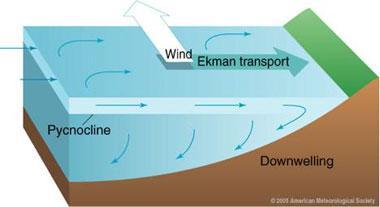
This study uses a state-of-the-art hurricane modeling system developed at the NOAA/Atlantic Oceanographic and Meteorological Laboratory’s Hurricane Research Division, the Basin-Scale Hurricane Weather Research and Forecast (HWRF-B) model, to demonstrate a link between an oceanographic process called coastal downwelling and the intensification of tropical cyclones (TCs or hurricanes) near landfall. We show that coastal downwelling […]
Read Full Article
This study examines the impact of assimilating Doppler Wind Lidar (DWL) data on hurricane prediction in the operational Hurricane Weather Research and Forecasting system. A series of experiments were conducted to identify the best way to assimilate the DWL data in comparison to assimilation of Tail Doppler radar data. A new data thinning method was […]
Read Full Article
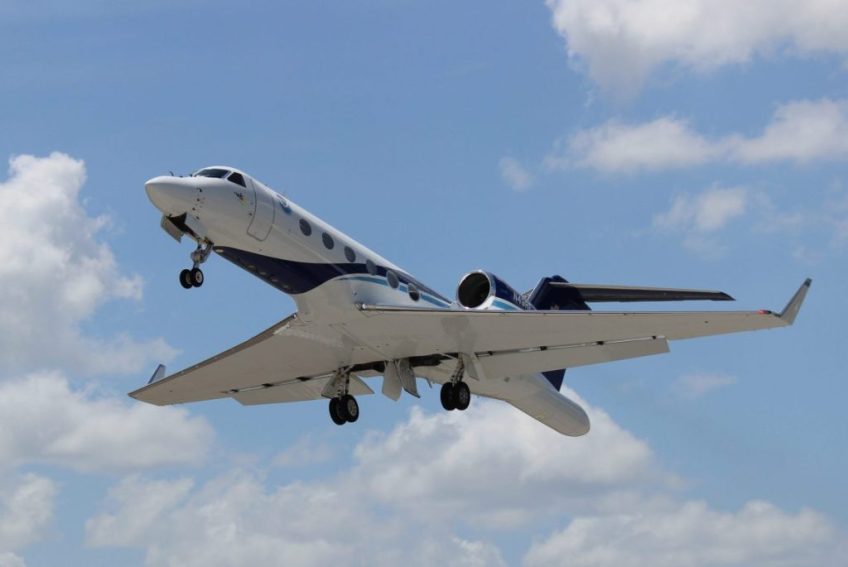
The primary goal of NOAA/OAR/AOML’s Hurricane Research Division (HRD) is to improve the understanding and prediction of tropical cyclones (TCs). While this improvement can be accomplished from a variety of approaches, a unique capability of HRD is the routine collection and analysis of airborne observations within the tropical cyclone inner core and its atmospheric and […]
Read Full Article
You can find more information at https://noaahrd.wordpress.com/2021/11/08/paper-describing-a-new-forecast-model-that-follows-multiple-tropical-cyclones-at-the-same-time-released-online-in-the-bulletin-of-the-american-meteorological-society/or by contacting aoml.communications@noaa.gov.
Read Full Article
Forecast models that follow individual tropical cyclones (TCs), like NOAA’s Hurricane Weather Research and Forecasting (HWRF) model, have contributed to significant improvement of intensity forecasts for over a decade. The original HWRF could only follow one TC, but recent advances allow individual multiple nests to follow more than one TC. This is the first time that the […]
Read Full Article
The study introduces a new database that is freely available and consists of over 900 airborne Doppler radar analyses collected between 1997–2020. We demonstrate the capabilities of the database by identifying how the structure of hurricanes changes depending on the strength of the storm, which provides a foundation for future research avenues and computer model […]
Read Full Article
Urban Corals in the Port of Miami Support Conservation and Restoration Initiatives SCROLL TO LEARN MORE What We Do Coral reefs worldwide are declining at alarming rates, therefore it is a priority to identify naturally-resilient coral populations to support conservation and restoration initiatives. Specifically, there is a need to characterize genotypes that can survive future [...]
Read Full Article
This summer during the 2022 Atlantic hurricane season, scientists at NOAA’s Atlantic Oceanographic and Meteorological Laboratory (AOML) will once again be on the frontlines helping NOAA prepare the public for severe weather. They will also conduct new research on the complex processes of how tropical cyclones form, develop, and dissipate. AOML’s operational missions tasked by NOAA’s Environmental […]
Read Full Article