
Category: Uncategorized

Review of how aircraft data are ingested into forecast models for tropical cyclones published in the Annals of the New York Academy of Science

This book chapter reviews how data are ingested into computer models and summarizes recent advances in how data relevant to tropical cyclones are used. Various centers worldwide use different methods to ingest data into computer models, a process called data assimilation.  There have been recent advances in the amount of data ingested from within and […]

Read Full Article

Study on how weak, disorganized tropical cyclones become upright allowing for intensification published in the Journal of Geophysical Research

This study shows how weak, disorganized tropical cyclones that have different center locations with height (misalignment) can develop a vertically aligned structure. The ability to predict whether and when a tropical cyclone will become aligned is important for intensity change forecasts, as storms can intensify quickly after achieving it. This study will help improve forecasts […]

Read Full Article

Meet HRD scientist Gus Alaka

Gus researches the relationship of the large-scale environment with hurricane formation and interactions between multiple storms. He also works closely with numerical hurricane models, including the Hurricane Analysis and Forecast System (HAFS), which is #NOAA’s next-generation hurricane prediction system. He flies on Hurricane Hunter missions to collect critical data that improve hurricane forecasts.  One of Gus’ […]

Read Full Article

Study relating the structure of the area in a tropical cyclone closest to the surface and intensity published in Monthly Weather Review

The study analyzes Doppler radar profile analyses to advance our understanding of how and why tropical cyclones intensify or weaken in relation to the shape of the vortex (whether the wind field is narrow or broad) and boundary-layer structure.  Example of a mean composite of only the radial wind velocity from airborne Doppler wind profile […]

Read Full Article

Paper describing the forecast techniques available to National Hurricane Center specialists published in Weather and Forecasting

This manuscript describes  the development of a set of simpler models (referred to as the National Hurricane Center guidance suite) that are currently utilized by the National Hurricane Center both for the forecasting of tropical cyclone track, intensity, and structure and for assessing the skill of other more sophisticated numerical models.  A description of the […]

Read Full Article

Study of how accurate forecast models are in the region close to the ocean surface published in the Journal of Advances in Modeling Earth Systems

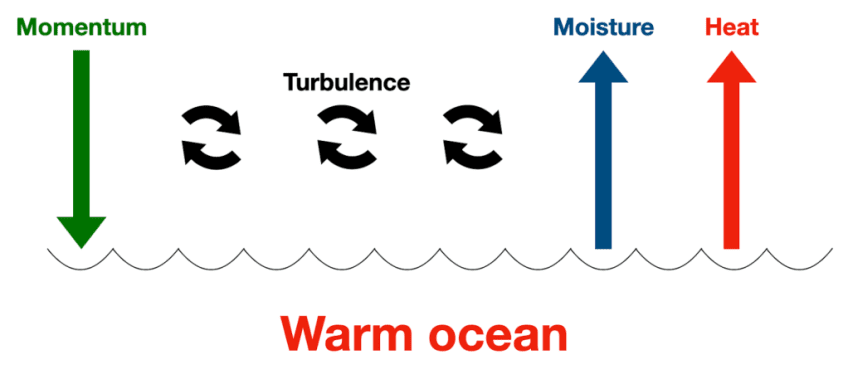
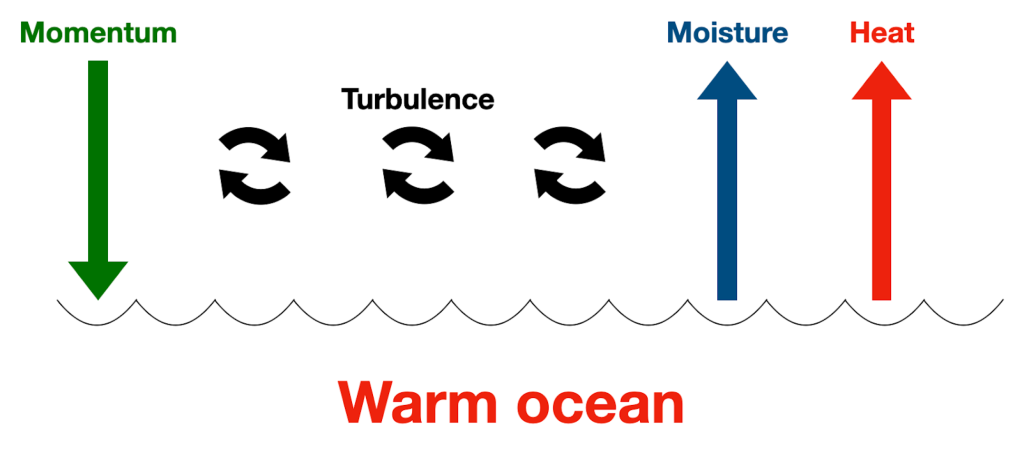
Poor modeling of hurricane boundary layer turbulence in computer models is a key obstacle to improving hurricane intensity forecasts. This study uses a recently developed modeling framework based on a large-eddy simulation, or LES, (where model grids are small enough to resolve turbulence) to evaluate the pros and cons of four different planetary boundary layer […]

Read Full Article

Review of aircraft missions into Hurricane Earl

NOAA conducted 20 aircraft missions into Hurricane Earl in late August and early September. The series of flights over 12 days was the longest series of flights into one system that NOAA has conducted. We recently reviewed these flights, and the slides from the review can be found here. Flight tracks of all the NOAA […]

Read Full Article