Neal Dorst discusses the 1935 Labor Day Hurricane with the Miami Herald
The full article can be found at http://www.miamiherald.com/news/weather/hurricane/article22726479.html.
The full article can be found at http://www.miamiherald.com/news/weather/hurricane/article22726479.html.
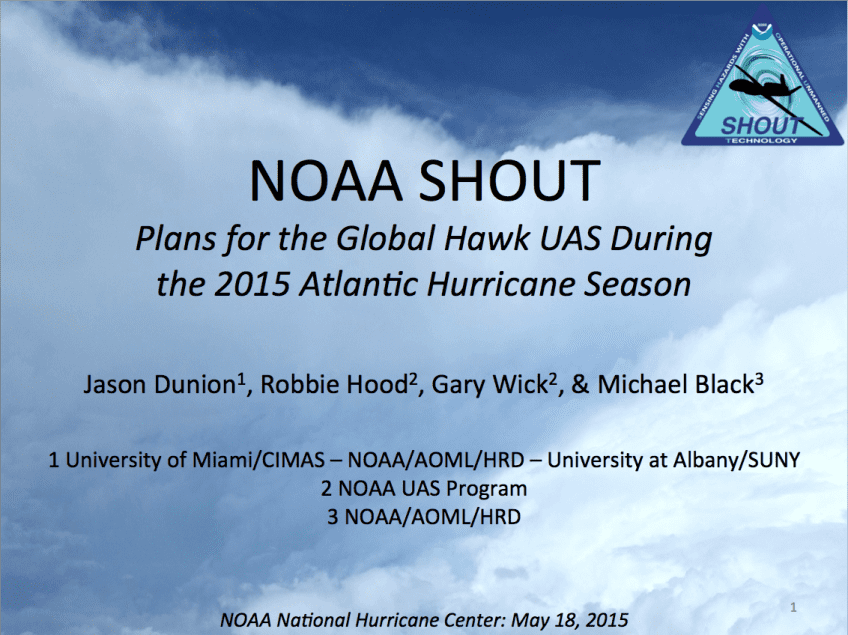

Jason Dunion presented a seminar on “NOAA Shout-Sensing Hazards with Operational Unmanned Technology- Plans for the Global Hawk UAS – Unmanned Aircraft Systems – during the 2015 Atlantic Hurricane Season” which is available on the NHC science presentation web site or at: ftp://ftp.aoml.noaa.gov/hrd/pub/blog/seminars/2015/2015shout.pptx Abstract A three-year joint experiment between NOAA and NASA, called Sensing Hazards […]
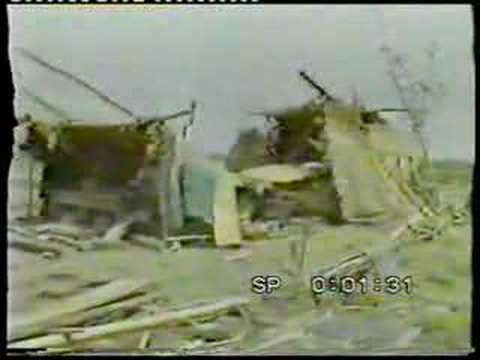
Very early on May 25, 1985, a severe cyclone came ashore near Chittagong, Bangladesh. It inundated many islands with a storm surge near 10 feet (3 m) in depth and whipped the mainland with winds of 96 mph (154 km/hr). Despite plenty of warning time, people had few shelters and little transportation to reach them. […]
The paper can be accessed at http://journals.ametsoc.org/doi/abs/10.1175/WAF-D-14-00109.1.

Vertical wind shear, the difference of wind velocity between the ground and the top of the tropical cyclone, generally restricts tropical cyclone intensification. A tropical cyclone can become tilted by the wind shear so that that the circulation at the top is displaced from that near the ground. Sometimes the tropical cyclone is able to […]

Summary: Until now, it was believed that hurricanes are maintained by the ocean alone. Observations from 62 hurricanes during 32 years support a different, nuanced conclusion. Besides the ocean, near-surface air temperature and moisture play a large, often dominant, role in maintaining a hurricane. Important conclusions: 1. The long-held belief that an ocean surface temperature […]

The paper can be accessed at http://journals.ametsoc.org/doi/abs/10.1175/MWR-D-14-00022.1.


On Tuesday, May 19, 2015, Dr. Robert Rogers led a kick off meeting to discuss our flight experiments and modules that will be part of the 2015 hurricane field campaign. Click here to review the proposed experiments.


The National Hurricane Center uses the Hurricane Weather Research and Forecasting (HWRF) model to forecast where a hurricane will go, how strong it will be, how large it will be, and where the strongest winds are. This paper looks at changes in what is happening in the atmosphere closest to the ocean surface and how […]