Meridional heat transport in the South Atlantic reveals links with global monsoons

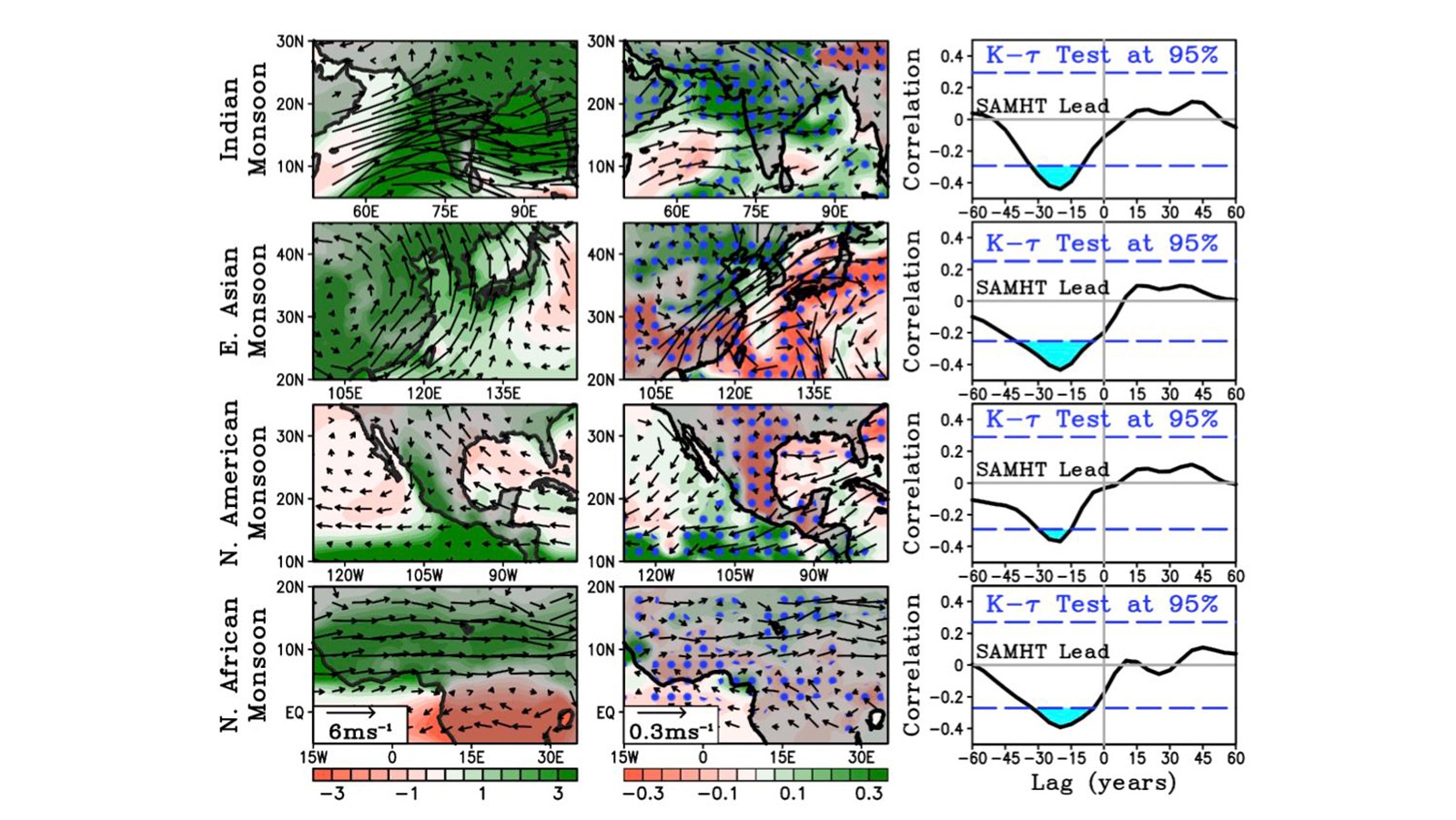
A recent paper published in the Journal of Climate led by PHOD researchers Hosmay Lopez, Shenfu Dong, Sang-Ki Lee, and Gustavo Goni provides a physical mechanism on how low frequency variability of the South Atlantic Meridional Heat Transport (SAMHT) associated with the Atlantic Meridional Overturning Circulation ( AMOC) may influence decadal variability of atmospheric circulation and monsoons. This is the first attempt to link the South Atlantic Overturning Circulation variability to weather and climate.

Read Full Article

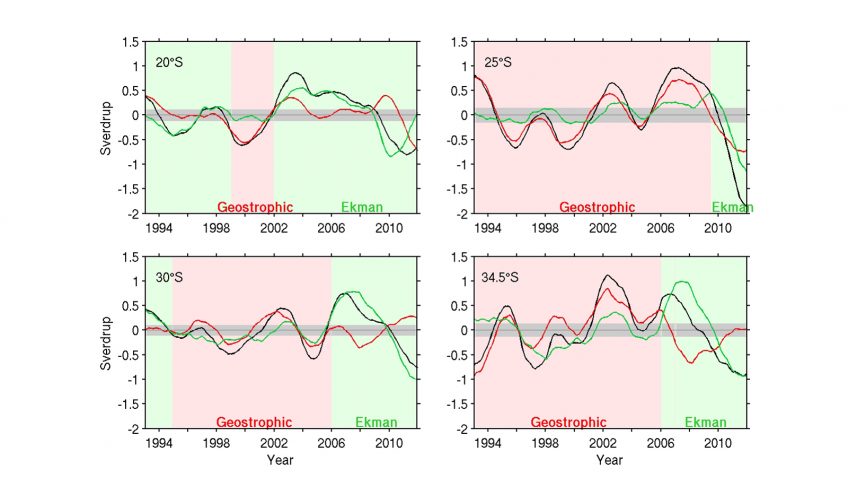
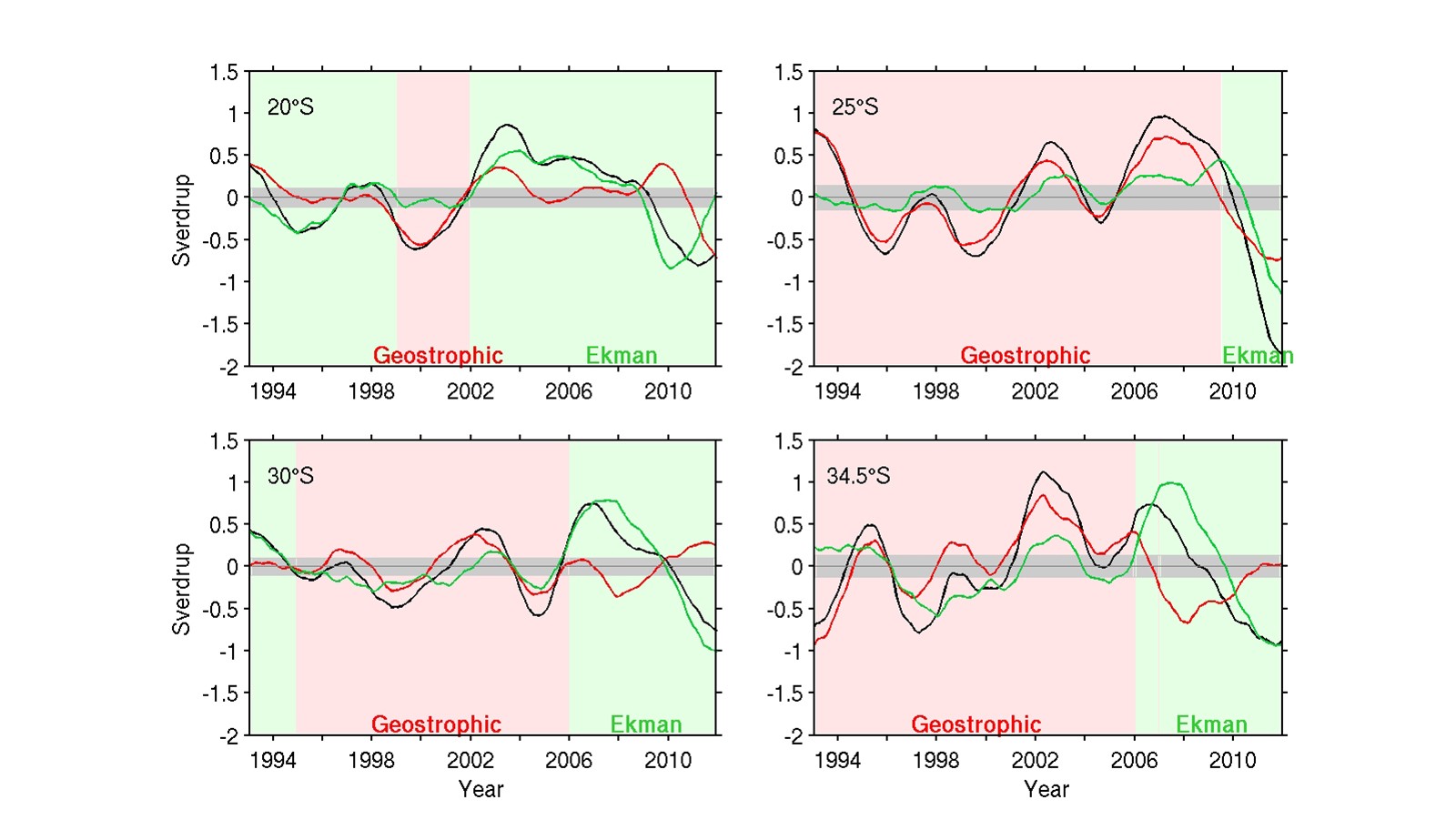
Dominance of the Geostrophic and Ekman Transports on the MOC in the South Atlantic

The Meridional Overturning Circulation (MOC) plays a critical role in global and regional heat and freshwater budgets. Recent studies have suggested the possibility of a southern origin of the anomalous MOC and meridional heat transport (MHT) in the Atlantic, through changes in the transport of warm/salty waters from the Indian Ocean into the South Atlantic basin. This possibility clearly manifests the importance of understanding the South Atlantic MOC (SAMOC). Observations in the South Atlantic have been historically sparse both in space and time compared to the North Atlantic. To enhance our understanding of the MOC and MHT variability in the South Atlantic, a new methodology is recently published to estimate the MOC/MHT by combining sea surface height measurements from satellite altimetry and in situ measurements (Dong et al., 2015).

Read Full Article

NOAA Advances Hurricane Research Technology with Improved Unmanned Aerial Vehicles

A team from NOAA and Raytheon successfully demonstrated recent advancements of the Coyote Unmanned Aircraft System (UAS) while completing a mid-flight launch from the NOAA P-3 Hurricane Hunter aircraft on January 7th. The successful flight verified new technology designed to improve Coyote’s ability to collect vital weather data to improve hurricane forecasts.

Read Full Article

AOML-led Carbon Dioxide Sampling Effort Helps Quantify the Ocean’s Role in Global Carbon Budget

Researchers with the Global Carbon Budget released their annual update for the global carbon budget in December 2015, revealing carbon dioxide (CO2) emissions from fossil fuels increased slightly in 2014 (+0.6%), but are projected to decline slightly (by est. -0.6%) in 2015. The global oceans serve as a natural buffer, offsetting increased emissions by absorbing an estimated 27% of human-produced CO2 from the atmosphere in 2014. Data collected, in part, from long-term surface ocean CO2 monitoring efforts, funded by NOAA’s Climate Program Office and the Ocean Acidification Program, indicate that the oceans removed about 10.7 billion tons of CO2 from the atmosphere in 2015.

Read Full Article

Underwater Gliders Retrieved After Successful Third Mission

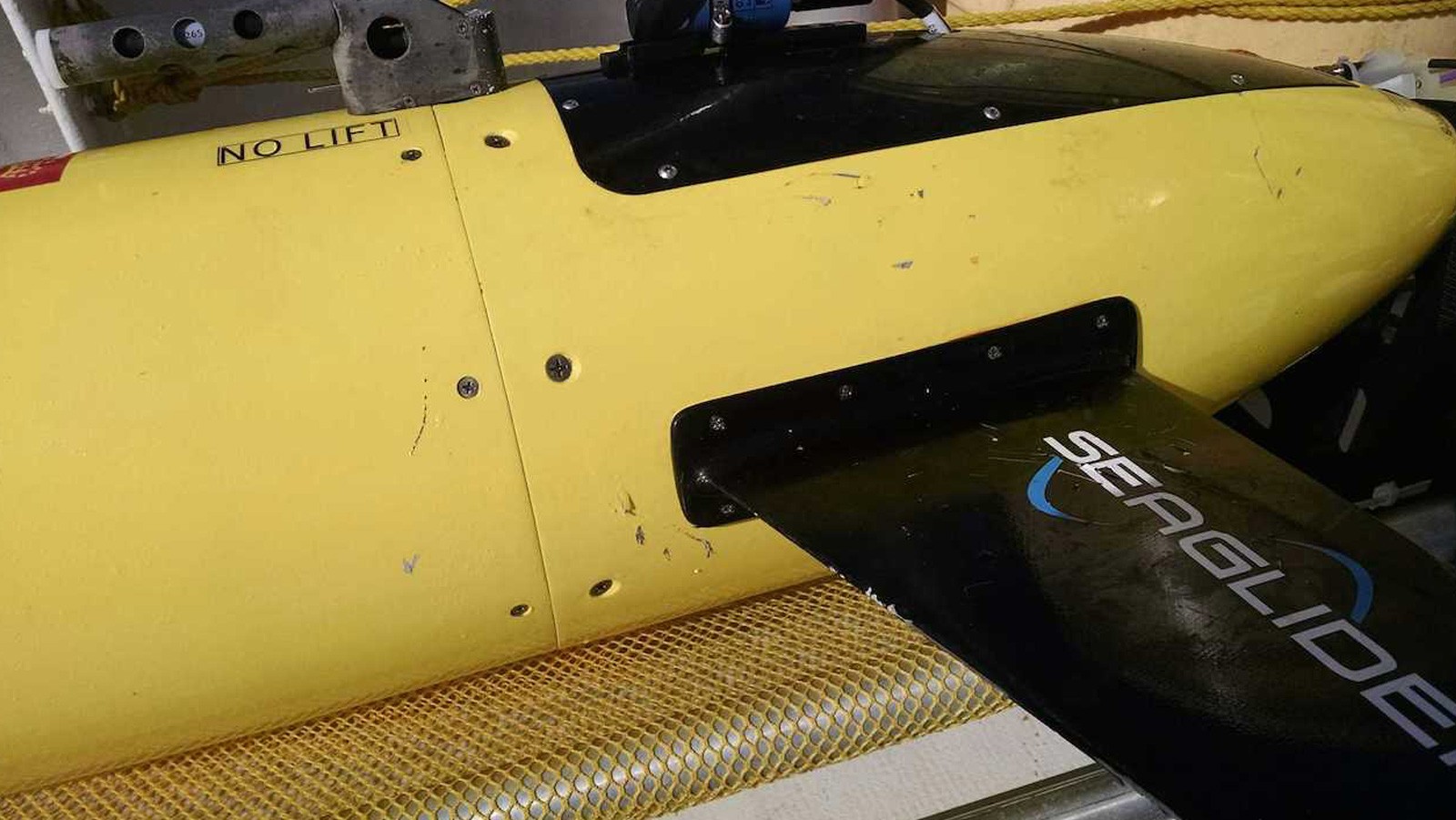
On November 16th-18th, AOML physical oceanographers partnered with the University of Puerto Rico to successfully recover two underwater gliders from the Caribbean Sea aboard the M/V La Sultana of the University of Puerto Rico Mayaguez. Over the course of the summer, the gliders successfully transected a region in the eastern Caribbean providing approximately 3000 profile observations of temperature, salinity, oxygen, and surface as well as depth-average current velocities.

Read Full Article

Advances in Tropical Cyclone Intensity Forecasts

Atlas, R., Tallapragada, V., & Gopalakrishnan, S. (2015). Advances in tropical cyclone intensity forecasts. Marine Technology Society Journal, 49(6), 149-160.

Abstract: NOAA established the 10-year Hurricane Forecast Improvement Project (HFIP) to accelerate the improvement of forecasts and warnings of tropical cyclones and to enhance mitigation and preparedness by increased confidence in those forecasts. Specific goals include reducing track and intensity errors by 20% in 5 years and 50% in 10 years and extending the useful range of hurricane forecasts to 7 days. Under HFIP, there have been significant improvements to NOAA’s operational hurricane prediction model resulting in increased accuracy in the numerical guidance for tropical cyclone intensity predictions. This paper documents many of the improvements that have been accomplished over the last 5 years, as well as some future research directions that are being pursued. Keywords: hurricane, Hurricane Forecast Improvement Program (HFIP), Hurricane Weather Research and Forecasting Model (HWRF)

Download PDF Publication
Read Full Article