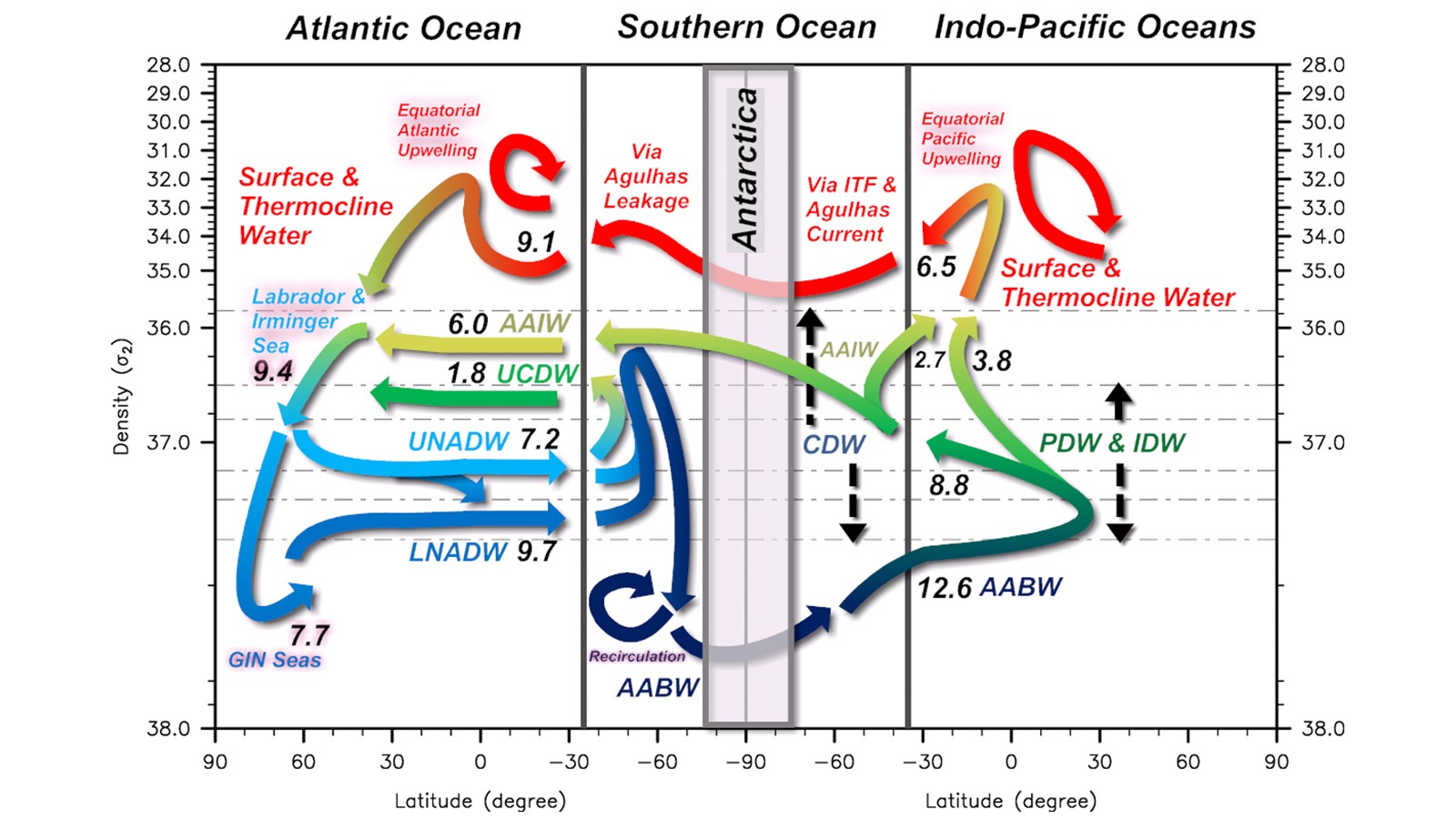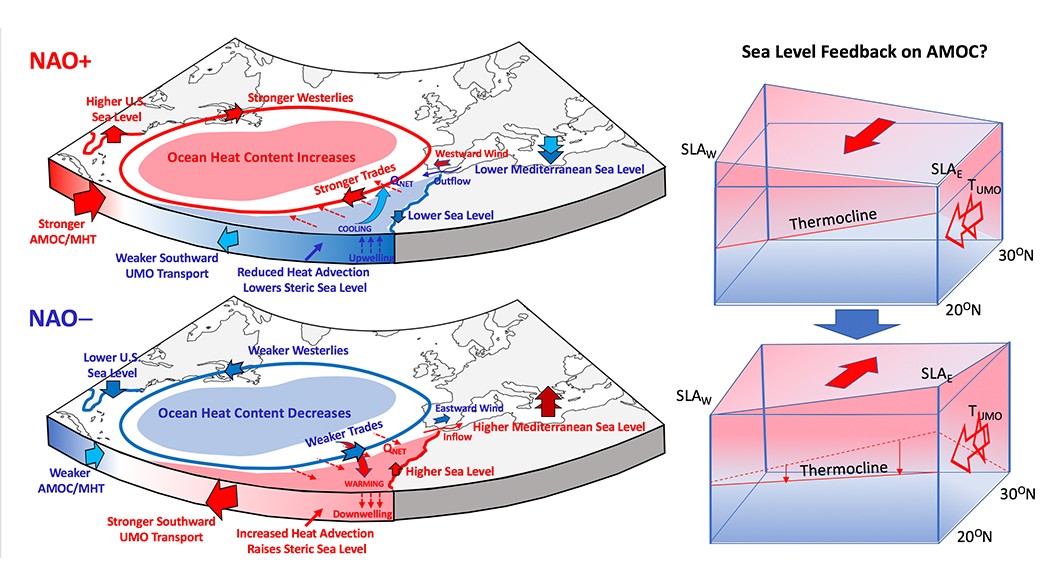
New Study Shows Atlantic Meridional Overturning Circulation and Mediterranean Sea Level are Connected

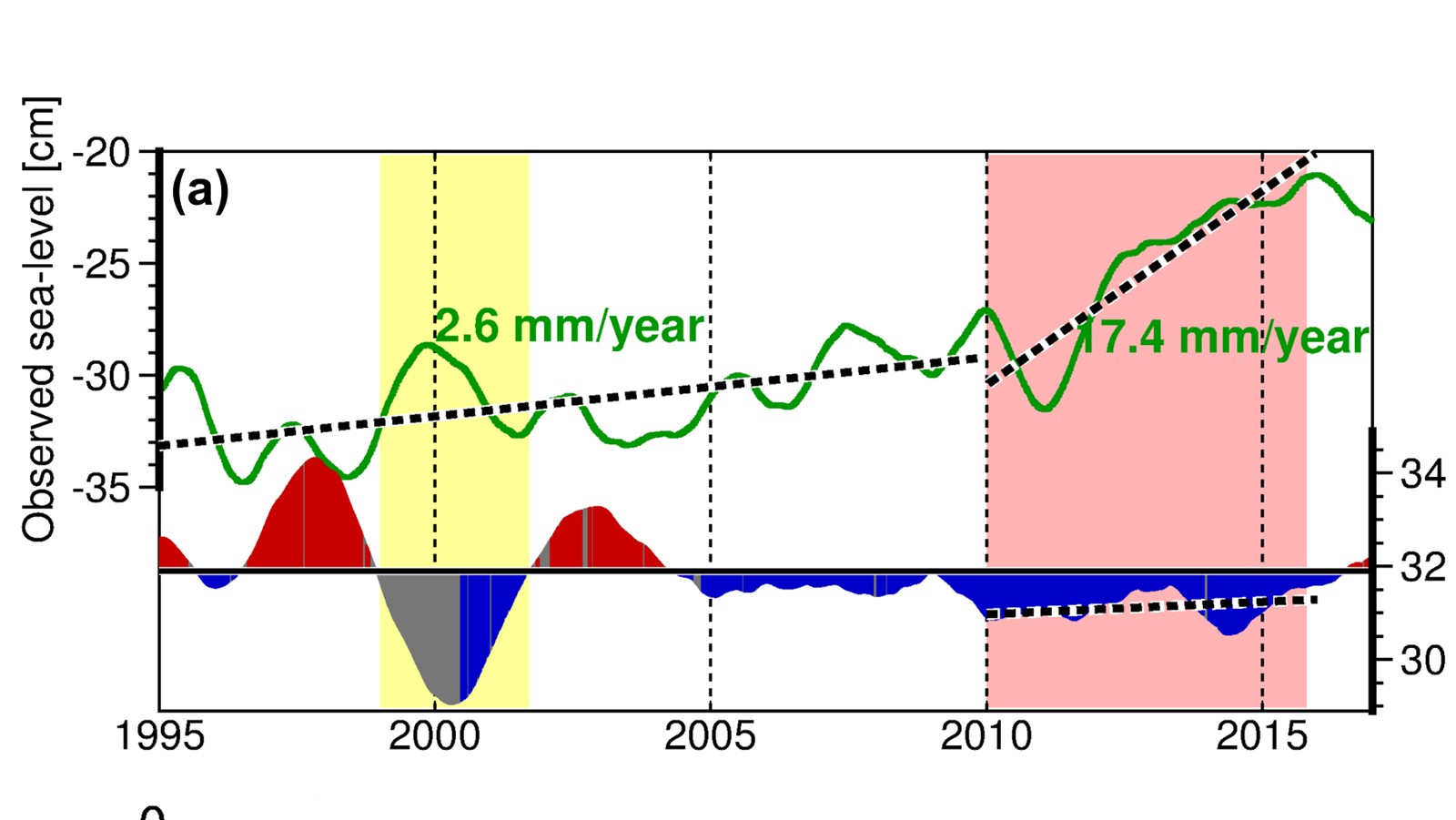
The global mean sea level rise caused by ocean warming and glacier melting over landforms such as Greenland is one of the most alarming aspects of a shifting global climate. However, the dynamics of the ocean and atmosphere further influence sea level changes region by region and over time. For example, along the U.S. East Coast, a pronounced acceleration of sea level rise in 2010-2015 was observed south of Cape Hatteras, while a deceleration occurred up North.  These patterns provide background conditions, on top of which shorter-period (and often stronger) weather-driven sea level fluctuations compound what coastal communities directly experience day by day. Therefore, to develop or improve regional sea level predictions, it’s important to identify these patterns and explore how they change over time.
Read Full Article

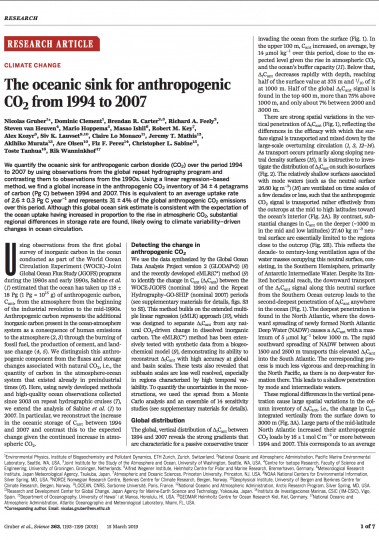
The Oceanic Sink for Anthropogenic CO2 from 1994 to 2007

Gruber, N., Clement, D., Carter, B. R., Feely, R. A., van Heuven, S., Hoppema, M., … & Monaco, C. L. (2019). The oceanic sink for anthropogenic CO2 from 1994 to 2007. Science, 363(6432), 1193-1199.

Abstract:

We quantify the oceanic sink for anthropogenic carbon dioxide (CO2) over the period 1994 to 2007 by using observations from the global repeat hydrography program and contrasting them to observations from the 1990s. Using a linear regression–based method, we find a global increase in the anthropogenic CO2 inventory of 34 ± 4 petagrams of carbon (Pg C) between 1994 and 2007. This is equivalent to an average uptake rate of 2.6 ± 0.3 Pg C year−1 and represents 31 ± 4% of the global anthropogenic CO2 emissions over this period. Although this global ocean sink estimate is consistent with the expectation of the ocean uptake having increased in proportion to the rise in atmospheric CO2, substantial regional differences in storage rate are found, likely owing to climate variability–driven changes in ocean circulation.

View PDF Article or read the NOAA Post.

Read Full Article

Global Ocean is Absorbing More Carbon from Fossil Fuel Emissions

The new research published by NOAA and international partners in Science finds as carbon dioxide emissions have increased in the atmosphere, the ocean has absorbed a greater volume of emissions. Though the volume of carbon dioxide going into the ocean is increasing, the percentage of emissions — about 31 percent — absorbed by it has remained relatively stable when compared to the first survey of carbon in the global ocean published in 2004.

Read Full Article

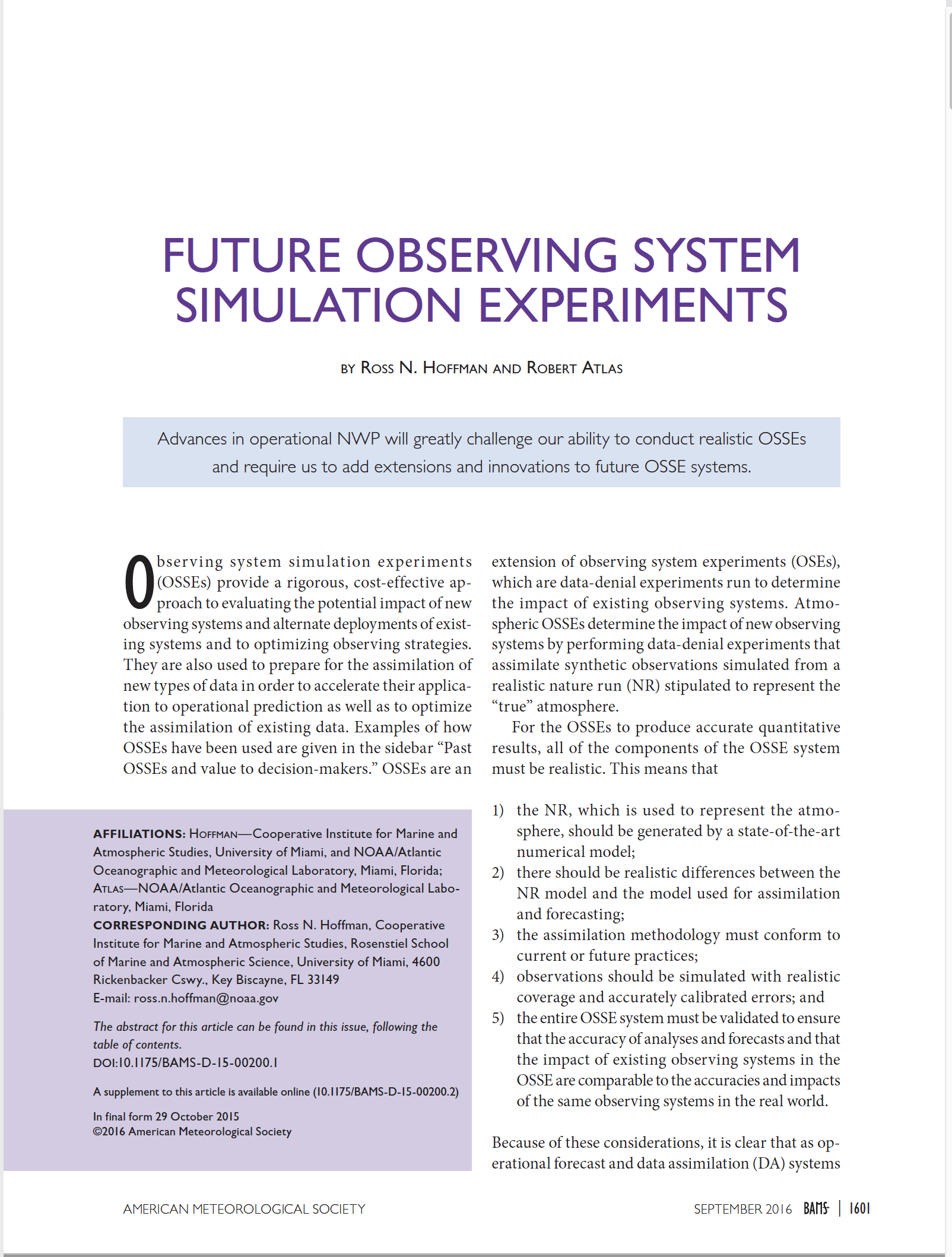
Future Observing System Simulation Experiments

Hoffman, R. N., & Atlas, R. (2016). Future observing system simulation experiments. Bulletin of the American Meteorological Society, 97(9), 1601-1616.

Abstract: An additional set of challenges will arise when future DA systems strongly couple the different Earth system components. As operational forecast and data assimilation (DA) systems evolve, observing system simulation experiment (OSSE) systems must evolve in parallel. Expected development of operational systems—especially the use of data that are currently not used or are just beginning to be used, such as all-sky and surface-affected microwave radiances—will greatly challenge our ability to construct realistic OSSE systems.In response, future OSSE systems will require coupled models to simulate nature and coupled observation simulators. The requirements for future evolving OSSE systems and potential solutions to satisfy these requirements are discussed. It is anticipated that in the future the OSSE technique will be applied to…

Read Full Article

Frank Marks, Sc.D. honored with the OAR Dr. Daniel L. Albritton Outstanding Science Communicator Award

The National Oceanic and Atmospheric Administration’s Oceanic and Atmospheric Research Dr. Daniel L. Albritton Outstanding Science Communicator Award recognizes outstanding achievement in communicating the meaning and value of NOAA-related science and research to non-scientific audiences. The award is named in honor of Dr. Daniel L. Albritton, a retired OAR scientist, who proved to be one of the most effective communicators of NOAA research and related science.

Read Full Article

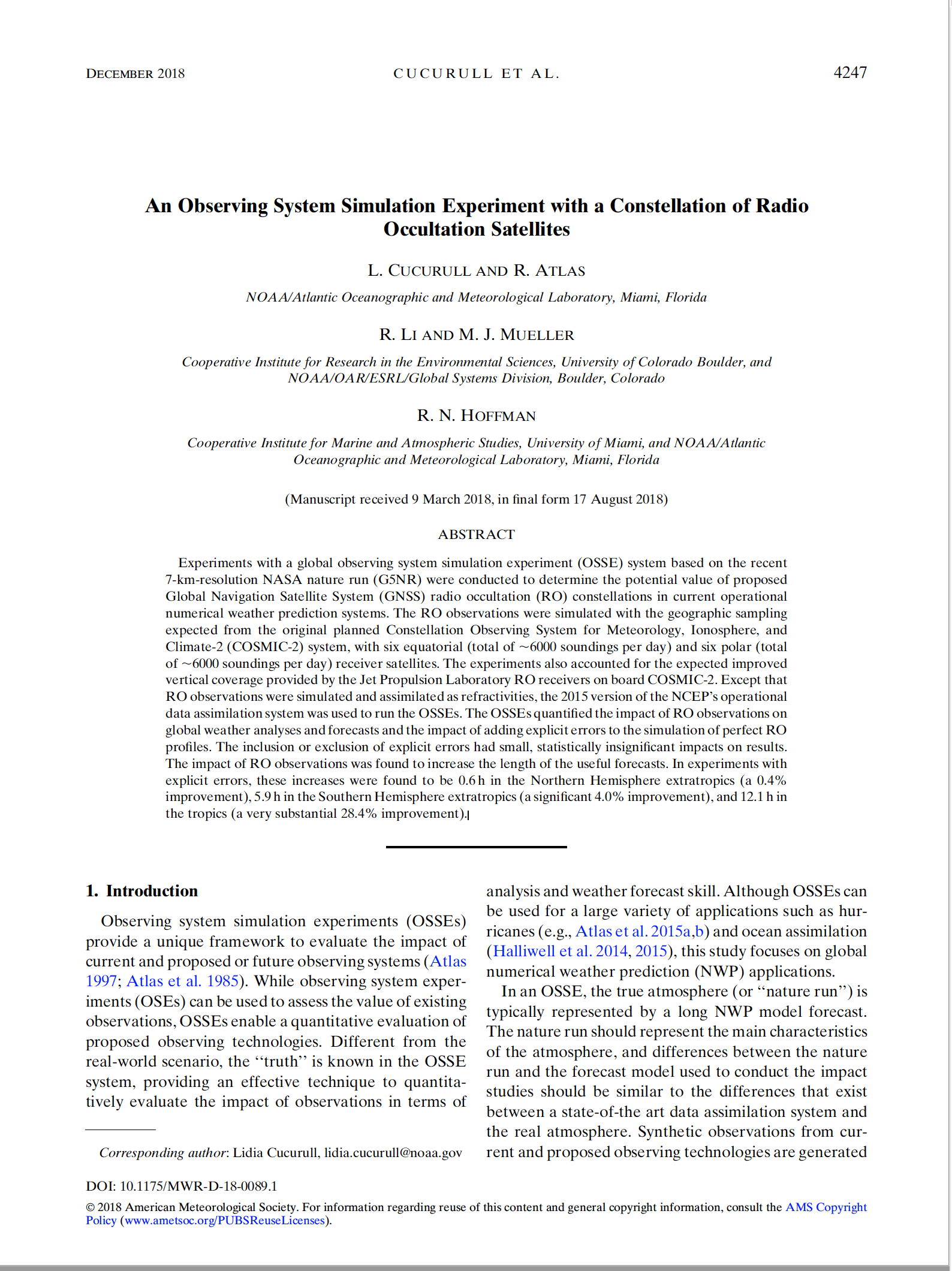
An Observing System Simulation Experiment with a Constellation of Radio Occultation Satellites

Cucurull, L., Atlas, R., Li, R., Mueller, M. J., & Hoffman, R. N. (2018). An Observing System Simulation Experiment with a Constellation of Radio Occultation Satellites. Monthly Weather Review, 146(12), 4247-4259.

Abstract: Experiments with a global observing system simulation experiment (OSSE) system based on the recent 7-km-resolution NASA nature run (G5NR) were conducted to determine the potential value of proposed Global Navigation Satellite System (GNSS) radio occultation (RO) constellations in current operational numerical weather prediction systems. The RO observations were simulated with the geographic sampling expected from the original planned Constellation Observing System for Meteorology, Ionosphere, and Climate-2 (COSMIC-2) system, with six equatorial (total of ;6000 soundings per day) and six polar (total of 6000 soundings per day) receiver satellites. The experiments also accounted for the expected improved vertical coverage provided by the Jet Propulsion Laboratory RO receivers on board COSMIC-2. Except that RO observations were simulated and assimilated as refractivities, the 2015 version of the NCEP’s operational data assimilation system was used to run the OSSEs. The OSSEs quantified the impact of RO observations on global weather analyses and forecasts and…
Download PDF

Read Full Article

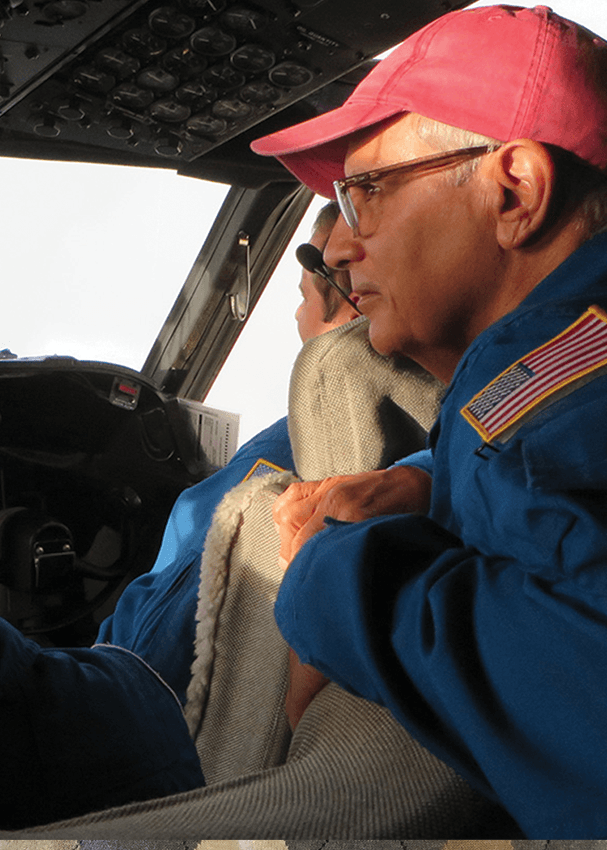
AOML Celebrates First All-Female P-3 Science Team

AOML hurricane researchers supported nearly all of the 50 missions NOAA’s Hurricane Hunter aircraft flew into eight tropical systems in 2018’s hurricane season, collecting data to help improve forecasts for future storms. The final flight into Hurricane Lane would make history for several reasons. Hurricane Lane was part of NOAA’s first hurricane deployment out of Hawaii, and one of those flights was led by the first all-female science crew on the flying laboratory. For Women’s History Month, we are proud to highlight this milestone and recognize the members of the first all-female science crew on a hurricane flight.

Read Full Article

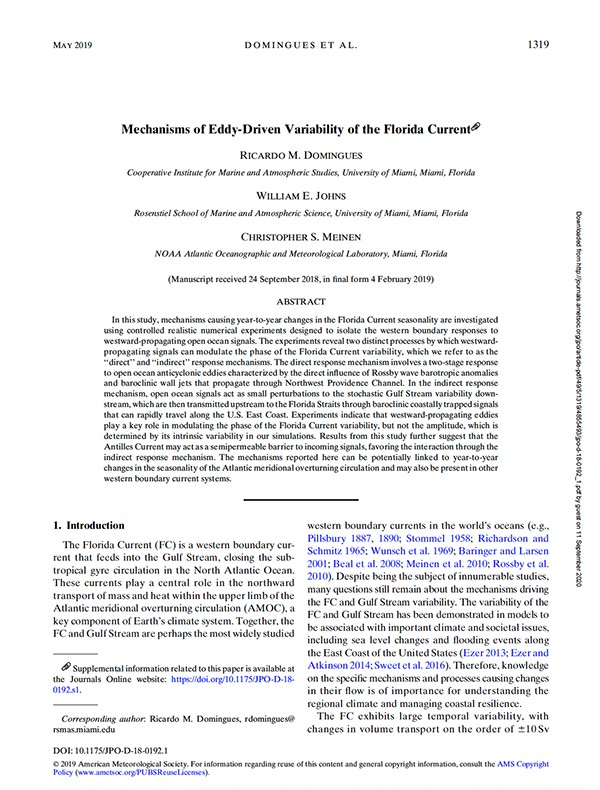
Mechanisms of Eddy-Driven Variability of the Florida Current

Domingues, R. M., Johns, W. E., & Meinen, C. S. (2019). Mechanisms of Eddy-Driven Variability of the Florida Current. Journal of Physical Oceanography, 49(5), 1319-1338.

Abstract: In this study, mechanisms causing year-to-year changes in the Florida Current seasonality are investigated using controlled realistic numerical experiments designed to isolate the western boundary responses to westward propagating open ocean signals. The experiments reveal two distinct processes by which westward propagating signals can modulate the phase of the Florida Current variability, which we refer to as the “direct” and “indirect” response mechanisms. The direct response mechanism involves a two-stage response to open ocean anticyclonic eddies characterized by the direct influence of Rossby-wave barotropic anomalies, and baroclinic wall-jets that propagate through Northwest Providence Channel…

Read Full Article

Increasing water temperature tied to rapid sea level rise along the U.S. East Coast during 2010-2015

In a new article accepted for publication in the Geophysical Research Letters, Ricardo Domingues (CIMAS University of Miami & NOAA/AOML) and his coauthors explored the observed rapid sea level rise along the U.S. East Coasts during 2010-2015, which is linked to extensive flooding and “sunny day” flooding (or nuisance flooding) events in large urban areas including Norfolk, Baltimore, Charleston, and Miami, among others.

Read Full Article