Establishing a Seawater CO₂ Reference Material Supply
<!–
Quantifying Sea-Air CO2 Fluxes on Seasonal and Regional Timescales
–>
SCROLL TO LEARN MORE
What We Do
With support in funding from NOAA’s Ocean Acidification Program (OAP) and Global Ocean Monitoring and Observations Program (GOMO), we are establishing AOML as the second facility in the United States for large-scale, inorganic carbon reference material production, and the only one globally providing Atlantic-specific reference material.
Our goal is to mimic the reference material facility created by Scripps Institution for Oceanography, which has pioneered the production of certified reference materials (CRMs) on a global scale. We’re partnering with Scripps Institution of Oceanography to ensure we are building up to the standards of the facility and procedures they created. We seek to complement the Scripps facility while mitigating the high risk that comes with the reliance on a single point-source to supply a growing demand for CRM’s.
Click the icons to explore:
Who We Are
Principal Investigators
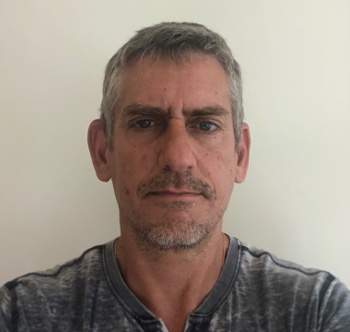
| Denis Pierrot, Ph.D.
Oceanographer



Background
The ocean absorbs billions of metric tons of carbon from the atmosphere every year – acting as a crucial sink in the natural carbon cycle. However, as anthropogenic emissions of carbon into the atmosphere rise, the global ocean accumulates beyond the natural cycle each year, capturing an estimated 25% of anthropogenic carbon from 1870 – 2017¹. To identify the key impacts of the ocean’s increasing accumulation of carbon on vital marine ecosystems and biodiversity, including effects of ocean acidification, research and academic institutions on a global scale are dedicated to measuring and quantifying the inorganic carbon system in the ocean. Conducting this research requires extensively investigating the carbonate chemistry of various regions throughout the global ocean, generally through the collection of seawater samples from the surface to the deep sea.
Effectively identifying the degree and intensity of ocean acidification in a given region requires an accurate understanding of the baseline conditions of seawater chemistry. This includes accurate measurements of the inorganic carbon parameters – total dissolved inorganic carbon (DIC), pH, partial pressure of carbon dioxide (pCO₂) and total alkalinity (TA). Inorganic carbon reference materials (RMs) act as the fundamental control against which DIC and TA seawater samples can be measured – and therefore allow the comparison of measurements across international research efforts, between instruments, and over time.
Our goal is to meet that rising demand and establish NOAA as a reliable supply chain for inorganic carbon RMs on a global scale.
Key Impacts
By establishing an RM facility at AOML, we’re creating more resilient infrastructure to provide for the increasing international demand – while improving the process and identifying solutions. We’re seeking ways to not only establish the same procedures for producing reference materials but addressing complications with the supply chains.
Our Process
To build the facility, we begin with a three-year proof-of-concept phase. Scientists at AOML collaborate with research institutions performing research cruises to collect natural seawater in the surface waters of the Gulf Stream along the 27° North line. At AOML in Miami, FL, the water is then treated and homogenized using filters and Ultraviolet (UV) sterilization methods following the methods established by Andrew Dickson’s lab at Scripps Institution of Oceanography (SIO).
We then quantify the measurements of each inorganic carbon parameter – DIC, pH, pCO₂, and TA – within each sample of seawater. While the first phase of production of RMs will entail following the procedures established by SIO, we then move into adapting these procedures with smaller bottle sizes and less toxic preservatives that could replace the need for mercuric chloride. The goal is to ensure there is no gas exchange with each bottle and no biological activity that could affect the reference materials. We then move to the certification process with NIST.
Seawater Reference Material
Once we begin production, all information regarding specific batches will be available here.
Partners
Funding Sources and Partners