Research Highlights
Research Interests
Quantify the impact of ocean observations on hurricane evolution and prediction in the Tropical Atlantic, the Caribbean Sea and the Gulf of America.
Estimate the impact of ocean processes in the Gulf of America on marine mammal assessment, ecosystem dynamics, and pollution transport.
Estimate the contribution of near-coast currents to the Atlantic Meridional Overturning Circulation.
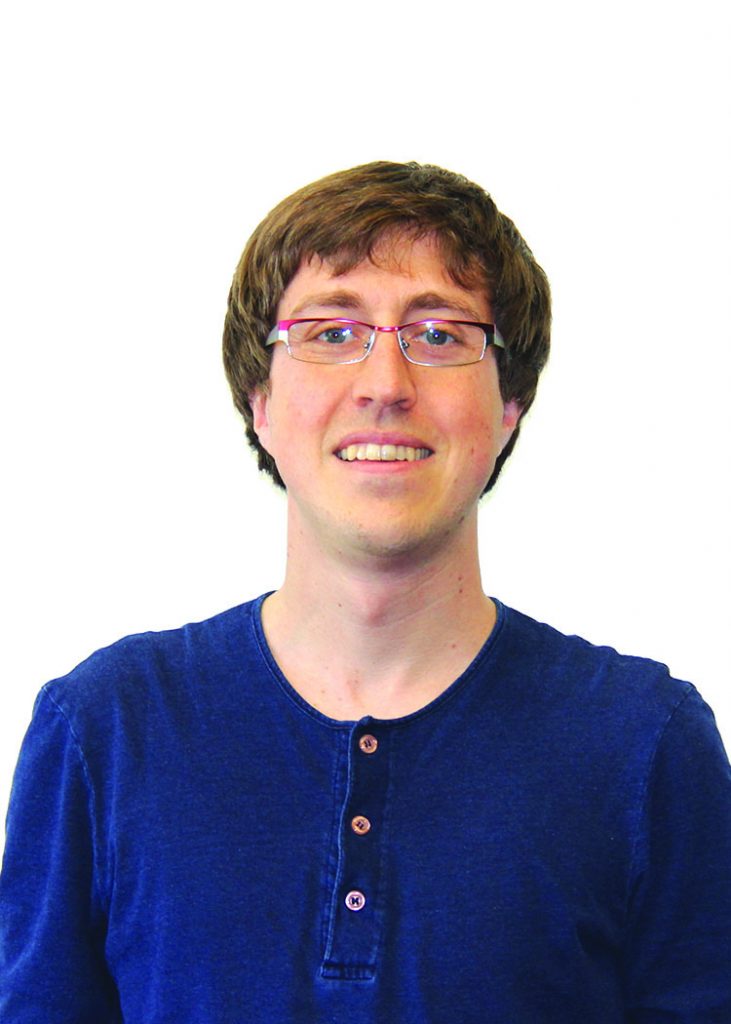
Matthieu Le Hénaff, Ph.D.
Oceanographer, Physical Oceanography Division
305.361.4435
4301 Rickenbacker Causeway
Miami, Florida 33149
“I have always been fascinated by scientific discoveries, and oceanography is a relatively young science where there is still so much to do, so many processes to observe and understand. That is why I wanted to become an oceanographer.”
Dr. Matthieu Le Hènaff is an Oceanographer in the Physical Oceanography Division of NOAA’s Atlantic Oceanographic and Meteorological Laboratory (AOML). His primary research interest is to improve our understanding of how regional ocean dynamical processes affect the other components of the Earth system, and how they can be better characterized and predicted. Dr. Le Hènaff’s research has a wide range of applications, from observing array design to pollution transport, ecosystem protection, boundary currents, marine mammal assessment, and hurricane forecasts. Dr. Matthieu Le Hènaff is a member of OceanPredict Observing System Evaluation – Task Team (OSEVal-TT), of the Compilation of Environmental, Threats, and Animal Data for Cetacean Population Health Analysis (CETACEAN) Steering Committee, and he is the co-chair of the Integrated Modeling Prediction Assimilation Coordination Team (IMPACT) supported by NOAA.
Current Work
Sustained ocean observations with underwater gliders in support of hurricane intensity forecast
Assessing long-term trends and processes driving variability in cetacean density throughout the Gulf of America using passive acoustic monitoring and habitat Modeling
A Lagrangian methodology to quantify and predict the impact of Caribbean eddies on Loop Current system dynamics
Combining coastal altimetry and in situ observations to improve Meridional Overturning Circulation estimates in the South Atlantic
2004, Engineer Degree, ENSTA, Paris, France
2004, Master’s Degree, Marine Science in Meteorology and Environment, Univ. Pierre et Marie Curie, Paris, France
2008, Ph.D. Physical Oceanography, Université Paul Sabatier, Toulouse, France
- Le Henaff, M., R. C. Perez, and F. P. Tuchen Surface currents [in “State of the Climate in 2025”] Bull. Amer. Meteor. Soc., 107 (7), S201-S203, https://doi.org/10.1175/BAMS-D-26-0141.1 2026
Ref. 4611 - McWhorter, J. K., Looney, L. B., Le Henaff, M., Roman-Stork, H. L., Foltz, G. R., Gomez, F., Cornec, M., Soden, M., Zhang, J. A., & Osborne, E. B. Subsurface biogeochemical response to Hurricane Idalia within a cyclonic eddy and river plume–stratified environment. Frontiers in Marine Science, 13, 1740354, https://doi.org/10.3389/fmars.2026.1740354 2026
Ref. 4558 - Tsei, S.K., Howden, S.D., Diercks, A.R., Balaguru, K., Le Henaff, M., Zhang, J.A., Pun, I.F. and Martin, K.M. Upper ocean mixing, surface heat fluxes, and heat content variability in the upper 150 m during Hurricane Laura (2020) Frontiers in Marine Science, 13, 1698557, https://doi.org/10.3389/fmars.2026.1698557 2026
Ref. 4609