The STORMFURY era Also
in 1961 the USN and USWB flew seeding experiments into Hurricane
Esther. This lead to the formal organization of
Project STORMFURY in 1962, as a joint venture of the USN, USWB,
and the National Science Foundation. This Project would continue
for more than twenty years and include NHRP, RFF and the
USAF in its operations. Also
in 1961 the USN and USWB flew seeding experiments into Hurricane
Esther. This lead to the formal organization of
Project STORMFURY in 1962, as a joint venture of the USN, USWB,
and the National Science Foundation. This Project would continue
for more than twenty years and include NHRP, RFF and the
USAF in its operations. A good deal of NHRP's research during the early years of STORMFURY were in areas critical to weather modification, such as cloud physics and storm structure and dynamics. Ironically, studies into natural hurricane variability would eventually lead to questions of the effectiveness of STORMFURY. 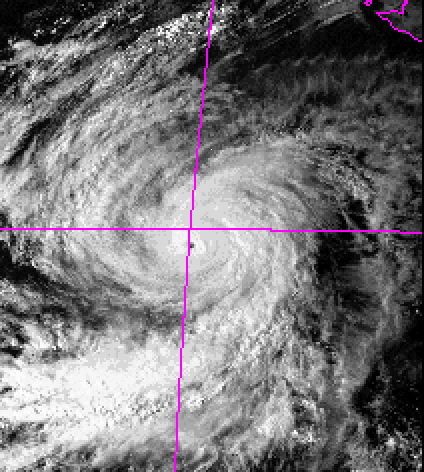 Satellites
had a dramatic impact on hurricane reconnaissance and research during
the early 1960's. It was no longer necessary to send aircraft on
long 'fishing expeditions', just looking for signs of tropical disturbances.
Using the satellites forecasters could pinpoint where the Hurricane
Hunters needed to fly. And researchers for the first time could
watch the formation of a hurricane from the very start. New insights
into storm genesis were also gained from this 'top-down' perspective.
However, the high cirrus
Central Dense Overcast of hurricanes still made it necessary
to fly planes into these storms to collect information. Satellites
had a dramatic impact on hurricane reconnaissance and research during
the early 1960's. It was no longer necessary to send aircraft on
long 'fishing expeditions', just looking for signs of tropical disturbances.
Using the satellites forecasters could pinpoint where the Hurricane
Hunters needed to fly. And researchers for the first time could
watch the formation of a hurricane from the very start. New insights
into storm genesis were also gained from this 'top-down' perspective.
However, the high cirrus
Central Dense Overcast of hurricanes still made it necessary
to fly planes into these storms to collect information.The DC6s and some NHRP scientist reached out to the international meteorological community in 1963 and 1964 by participating in the International Indian Ocean Expeditions. This was the first in a long series of multi-national experiments to which the Project in its various forms was to contribute its expertise in tropical weather and in airborne meteorological observation. In 1964 NHRP was redesignated the National Hurricane Research Laboratory (NHRL) to signify a more permanent status. The Project was initially supposed to run for only a few years; time enough, it was thought, to answer all the basic questions about hurricanes. As the complex nature of tropical storms became apparent it was realized that hurricane research needed to be an on-going concern. It was already paying dividends in the development of statistical track forecast models and a storm surge forecast guide. 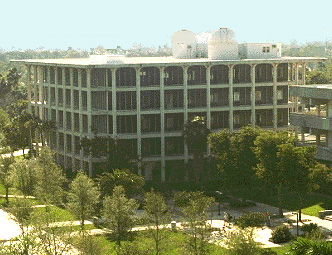 This year also saw both NHC and NHRL
move to the Computer Center Building on the University of Miami
campus in Coral Gables, Florida. This move brought the government
researchers into closer contact with the academic community and
also brought access to the University's computer systems. The greater
computing power lead to the development of a numerical storm surge
model and to NHC-67, a statistical hurricane track forecast model
that outperformed all rivals in 1966. That year the U.S. Government
reorganized its earth science agencies into the Environmental Science
Services Administration (ESSA). This included the USWB, NHC, RFF,
and NHRL. This year also saw both NHC and NHRL
move to the Computer Center Building on the University of Miami
campus in Coral Gables, Florida. This move brought the government
researchers into closer contact with the academic community and
also brought access to the University's computer systems. The greater
computing power lead to the development of a numerical storm surge
model and to NHC-67, a statistical hurricane track forecast model
that outperformed all rivals in 1966. That year the U.S. Government
reorganized its earth science agencies into the Environmental Science
Services Administration (ESSA). This included the USWB, NHC, RFF,
and NHRL. Work began on multi-layer primitive equation track forecast models and on SANBAR, a dynamic physics model. Gordon Dunn and the staff of NHC published a paper evaluating the positive impact of the previous eight years of computer forecast models on track prognostications. Hurricane computer models were also used to simulate hurricane modification experiments to try to validate the field work of STORMFURY. In 1967 Dr. Gentry became Director of STORMFURY in addition to NHRL Director. This brought the Project under the direct management of NHRL and required a greater commitment of the Laboratory's personnel and resources. More restrictions were placed on where and when a hurricane could be a candidate for seeding and far fewer experiments were being flown. To increase the opportunity for candidate storms several attempts were made in the early 1970's to move Project STORMFURY's operations to the Pacific, but these plans were put aside each time.  Improvements were made to the cloud physics instrumentation on the
DC6 in 1968. And for the next two years a series of experiments
were carried out which released tracers into hurricanes in an attempt
to study the air flow by airborne radar.
Improvements were made to the cloud physics instrumentation on the
DC6 in 1968. And for the next two years a series of experiments
were carried out which released tracers into hurricanes in an attempt
to study the air flow by airborne radar.In the summer of 1969 the DC6s and several NHRL scientists participated in the Barbados Oceanographic and Meteorological Experiment (BOMEX), a huge multi-national, multi-agency scientific study set east of Barbados. This was the second in a series of such large scale experiments to which the Lab contributed. BOMEX's purpose was to better define the the atmospheric and air/sea interaction processes in the tropics, and hence a better understanding of the energy source of hurricanes.
|
Links of Interest
AOML Tools & Resources
Employee Tools
Stay Connected




|

| ||
 The Department
of Commerce, in 1970, reorganized ESSA into the
The Department
of Commerce, in 1970, reorganized ESSA into the  The Experimental
Meteorology Laboratory (EML) in collaboration with NHRL
began the Florida Area Cumulus Experiment (FACE) in 1970. FACE,
which was done in two segments, attempted to document the benefits
of cloud seeding over the Florida peninsula. This, in turn, was
supposed to prove the efficacy of seeding in modifying hurricanes.
Instead the second segment, ending in 1983, proved inconclusive.
The Experimental
Meteorology Laboratory (EML) in collaboration with NHRL
began the Florida Area Cumulus Experiment (FACE) in 1970. FACE,
which was done in two segments, attempted to document the benefits
of cloud seeding over the Florida peninsula. This, in turn, was
supposed to prove the efficacy of seeding in modifying hurricanes.
Instead the second segment, ending in 1983, proved inconclusive.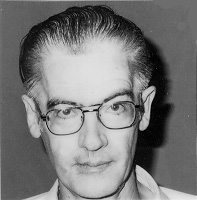 In 1974 Dr. Gentry retired and Dr. Noel LaSeur took over the Directorship.
A year later the Experimental Meteorology Laboratory was joined
to NHRL to form the National Hurricane and Experimental
Meteorology Laboratory (NHEML). This brought the Lab
to the largest staffing in its history, with nearly sixty scientist
and support personnel.
In 1974 Dr. Gentry retired and Dr. Noel LaSeur took over the Directorship.
A year later the Experimental Meteorology Laboratory was joined
to NHRL to form the National Hurricane and Experimental
Meteorology Laboratory (NHEML). This brought the Lab
to the largest staffing in its history, with nearly sixty scientist
and support personnel. The first experiment under the Global Atmospheric Research Project
(GARP) was the GARP Atlantic Tropical Experiment
The first experiment under the Global Atmospheric Research Project
(GARP) was the GARP Atlantic Tropical Experiment