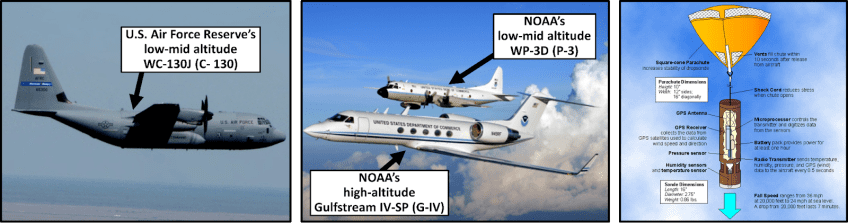
An experimental version of the Hurricane Weather Research and Forecasting model (HWRF) is used to conduct the most comprehensive assessment to date of the impact of dropsonde data obtained at different distances from the center of a tropical cyclone (TC) on forecasts. The main finding is that dropsonde data within 250 km of the TC […]
Read Full Article
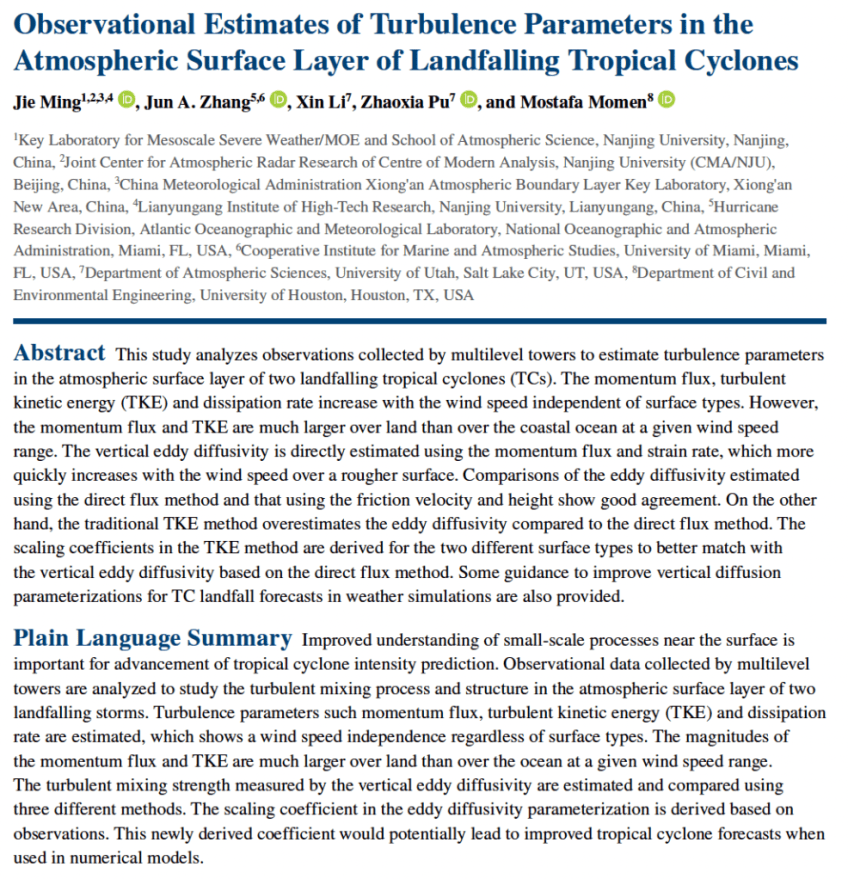
Improved understanding of small-scale processes near the surface is important for advancement of TC intensity prediction. Observational data collected by multilevel towers are analyzed to study the turbulent mixing process and structure in the atmospheric surface layer of two landfalling TCs. Newly derived coefficients may lead to improved forecasts when used in numerical models. Read […]
Read Full Article
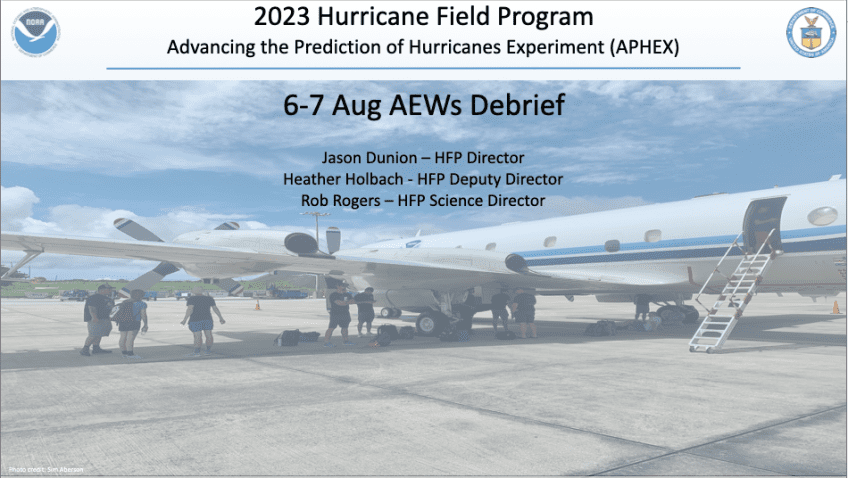
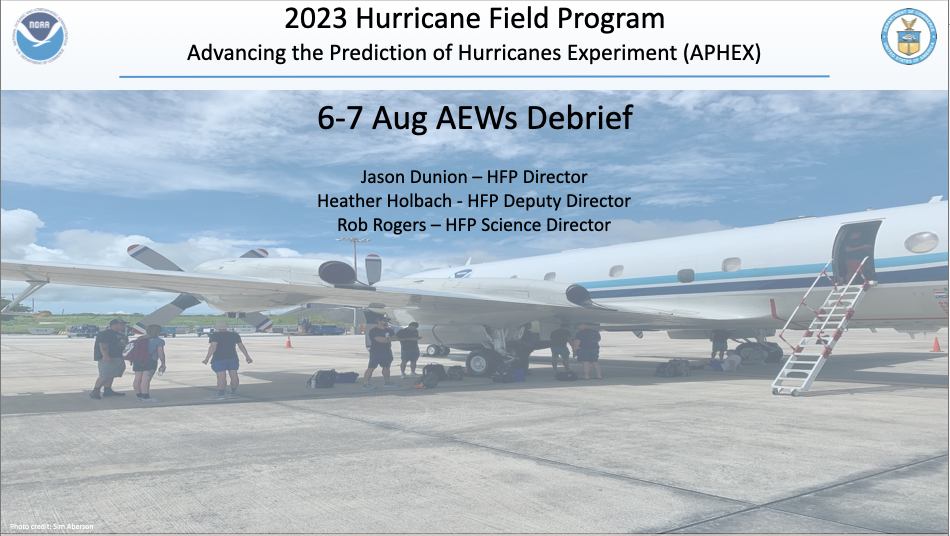
NOAA recently conducted a series of flights into African Easterly Waves to try to understand why some develop into tropical cyclones and some do not. A quick look at some of the data obtained and some logistical issues is available at https://www.aoml.noaa.gov/ftp/hrd/blog/meetings/2023/6_7Aug_AEWs_Debrief.pptx For more information, contact aoml.communications@noaa.gov.
Read Full Article
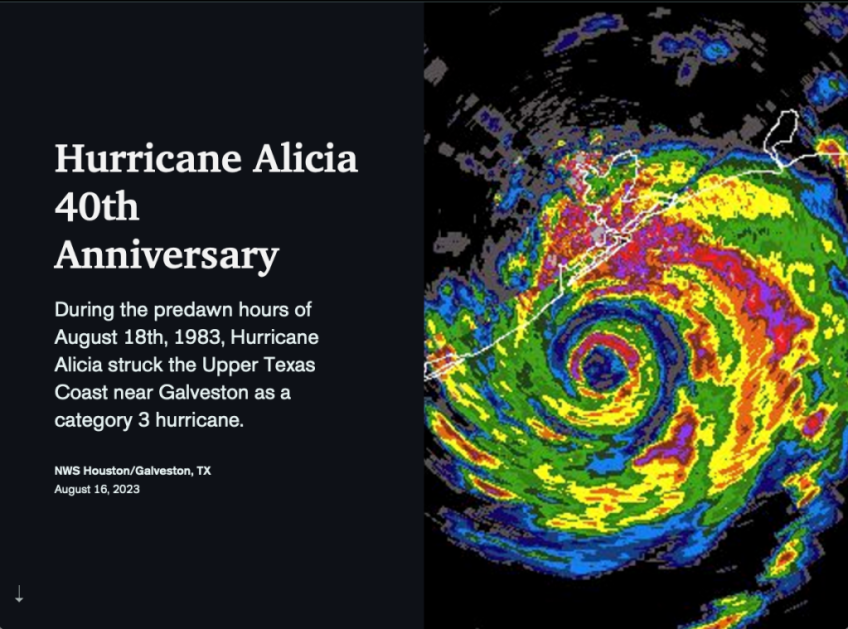
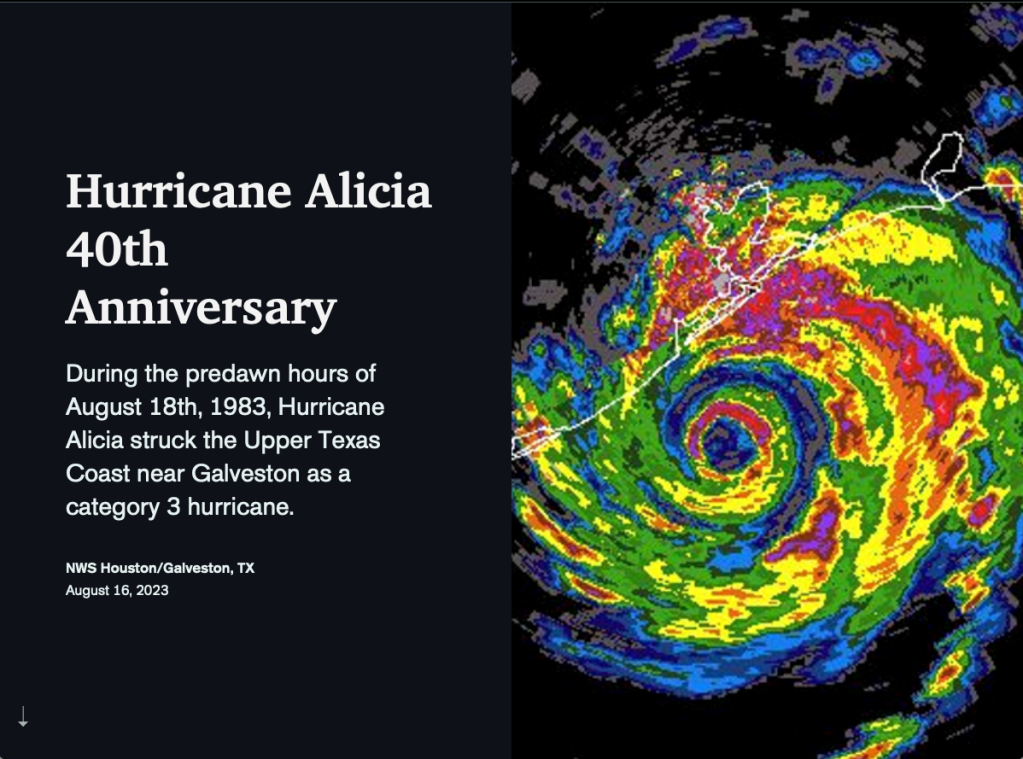
To commemorate the 40th anniversary of Hurricane Alicia’s landfall near Galveston, the National Weather Service Office in Houston/Galveston has created a story map. Details in the story map include the work that NOAA/AOML/HRD did with the hurricane, including multiple flights with Hurricane Hunter aircraft, gathering the first-ever airborne Doppler radar data in a major hurricane, […]
Read Full Article
Media Resources Images, Video, and Sound Relevant to AOML's Latest Stories. Please use these resources as needed. All resources are as high quality as possible and are approved for release. Unless stated otherwise, all resources should be accredited to NOAA. Sections are based on media release, with most recent first. July 31-August 1, 2023: Coral [...]
Read Full Article
Research Highlights July 30, 2025AOML is honored with NOPP Excellence in Partnering AwardJanuary 23, 2024A Collaborative Effort Investigates the Biological Carbon Pump, Deploying Sediment Traps Hundreds of Meters BelowMay 23, 2022New study highlights major step forward in monitoring ocean health Luke Thompson, Ph.D. Research Scientist, Ocean Chemistry and Ecosystems Division 305.361.4553 Luke.Thompson@noaa.gov Luke_Thompson 4301 Rickenbacker [...]
Read Full Article
AOML/HRD has concluded research missions in the central North Atlantic. The goal of these flights was to sample the interactions between two tropical waves and the Saharan Air Layer, to gain a better understanding of tropical cyclogenesis processes as part of NOAA APHEX Genesis objectives, and to use model ensembles to target areas of forecast […]
Read Full Article
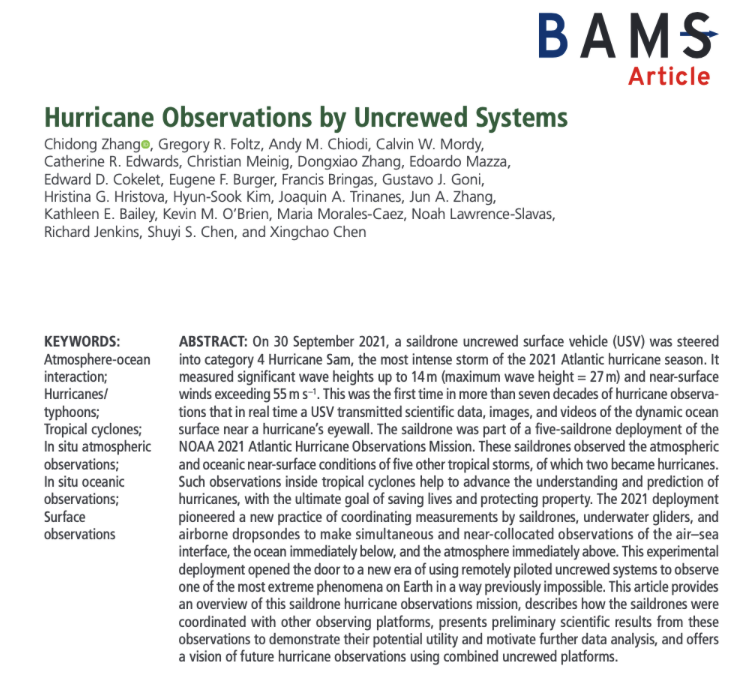
An overview of the saildrone mission into Hurricane Sam in September 2021 is presented. The paper describes how saildrones were coordinated with other observing platforms, presents preliminary scientific results to demonstrate their use, and offers a vision of future hurricane observations using multiple uncrewed observing systems. More information on saildrones in hurricanes can be found […]
Read Full Article
Research Highlights July 30, 2025AOML is honored with NOPP Excellence in Partnering AwardJanuary 23, 2024A Collaborative Effort Investigates the Biological Carbon Pump, Deploying Sediment Traps Hundreds of Meters BelowMay 23, 2022New study highlights major step forward in monitoring ocean health Katherine Silliman, Ph.D. Research Scientist, Ocean Chemistry and Ecosystems Division 305.361.4324 katherine.e.silliman@noaa.gov Katherine Silliman 4301 [...]
Read Full Article
Research Highlights February 5, 2021Increasing Red Tide Sampling off the West Florida ShelfFebruary 7, 2020Nutrients Entering Biscayne Bay: Tracking the Source with New TechnologyOctober 30, 2018New Cruise Studies Red Tide Impacts in South Florida Ian Smith Research Associate, Ocean Chemistry and Ecosystems Division 305.361.4527 Ian.Smith@noaa.gov 4301 Rickenbacker Causeway Miami, Florida 33149 AboutCurrent WorkPublicationsAbout Ian Smith [...]
Read Full Article